AK Party spokesman Ömer Çelik says road map has emerged
What happened?
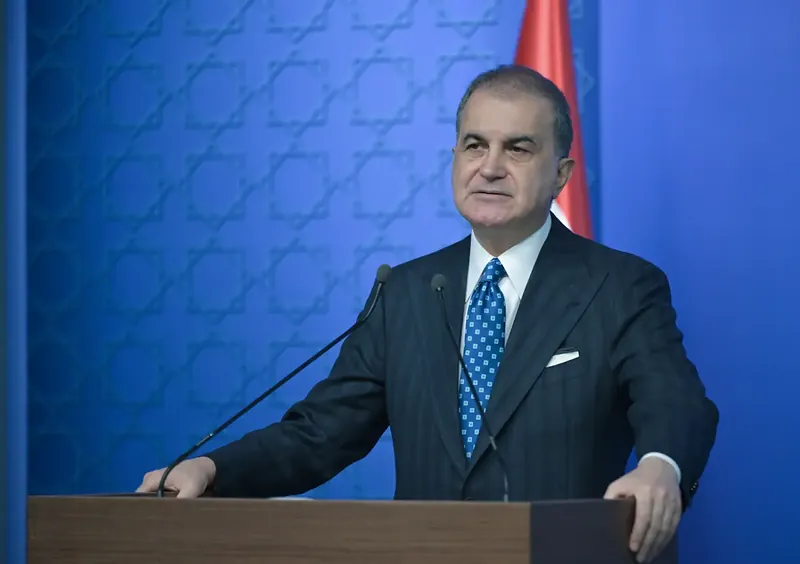
AK Party Deputy Chairman and party spokesman Ömer Çelik said the steps to be taken in Syria, Iraq and Iran cannot be considered separately from one another. Çelik held a press conference after the meeting of the Central Executive Board (MYK) at his party's headquarters.
The process that the Turkish government calls 'Terror-Free Türkiye', and which the DEM Party has also endorsed, was the main subject of his remarks. Çelik said the agenda on the process was fixed. He said his party was working to bring the process to a definitive conclusion. Çelik said he considered the progress made so far extremely valuable and that the road map had emerged.
Çelik claimed that propaganda was being spread suggesting the process did not include Iran and PJAK. He responded: "Yet just as Terror-Free Türkiye and a terror-free region are intertwined, arm in arm and inseparable from each other, in terms of a terror-free region the steps to be taken in Syria, in Iraq and in Iran are also inseparable from one another."
Çelik said these steps could be taken through different methods. According to Çelik, the integration of the Syrian Democratic Forces (SDF) and the evacuation of district, in province, by the Şingal Resistance Units (YBŞ) are different methods. Çelik said a similar situation could also apply to PJAK.
Çelik was reminded of the 50-point assessment of the process made in an interview by Nationalist Movement Party (MHP) Chairman Devlet Bahçeli. He was then asked what concrete developments were expected on the ground in the coming period. Çelik replied: "The 50 points announced by Mr Bahçeli contain principles, a road map and approaches that should be read carefully." He said he, too, had read these assessments carefully.
Çelik argued that Bahçeli had responded wisely and prudently to the debates and negative approaches regarding the process. "I recommend that everyone read those 50 points," he said. According to Çelik, these assessments contain important observations on the dynamics of the process, the principles on which it rests and the vision of the future it aims for. Çelik said: "The solution models, formulas and equations we have are no longer sufficient to solve these problems. How can we find, without compromising on principles, new and inclusive solution models and equations in which everyone can have a place, and how can we produce new approaches?"