Al-Tamimi says Kurdistan Parliament session was legal
What happened?
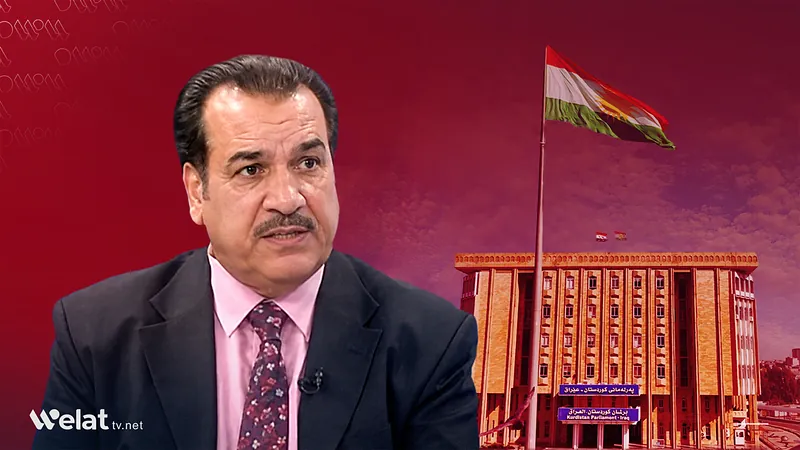
Legal researcher Ali al-Tamimi argued that a political party's withdrawal from the Kurdistan Regional Government does not bring down the government. According to al-Tamimi, this step also does not strip the government of its legal legitimacy.
Al-Tamimi set out these views in an article published on Friday, November 6, 2026. He recalled that one of the two main parties in the Kurdistan Region had announced its withdrawal from the government. He said the same party does not recognize the parliament's last session. He also reported that the party had raised the possibility of setting up parallel institutions in the and provinces under the Kurdistan Region.
According to al-Tamimi, the validity of a session is not determined by political consensus. What is decisive is whether the legal quorum set out in the internal bylaws is met. The researcher said a boycott is a legitimate political right but does not necessarily invalidate the session. He recalled that the Iraqi Federal Supreme Court had previously rejected the case seeking the dissolution of the Kurdistan Parliament. He noted that under Article 94 of the constitution, such rulings are final and binding.
Al-Tamimi explained that the current government is a caretaker government handling day-to-day affairs. He said the direct legal consequence of the withdrawal is that the ministries held by the party's representatives become vacant. He also stated that the Iraqi constitution does not require all parties to take part in the government.
On the separate-region debate, he pointed to Article 117 of the constitution, saying it recognizes the Kurdistan Region together with its provinces. He explained that Article 119 concerns provinces not affiliated with a region that want to form a new region, and contains no explicit mechanism for seceding from an existing federal region. He noted that the 2008 Law No. 13 on the Formation of Regions likewise contains no secession procedure.
According to al-Tamimi, the Federal Supreme Court issued an interpretive ruling on Article 1 of the constitution in 2017. In that ruling, the court stated there is no provision allowing secession from the federal system. Al-Tamimi recalled that the court also found the referendum held the same year to be unconstitutional.
The researcher said that at this stage, the separate-region rhetoric could be read as a tool of political pressure. He called for disputes to be resolved through dialogue, the constitution and the judiciary. He warned that parallel institutions could deepen political and administrative division.