UN's Iraq coordinator says generators are heavily polluting the air
What happened?
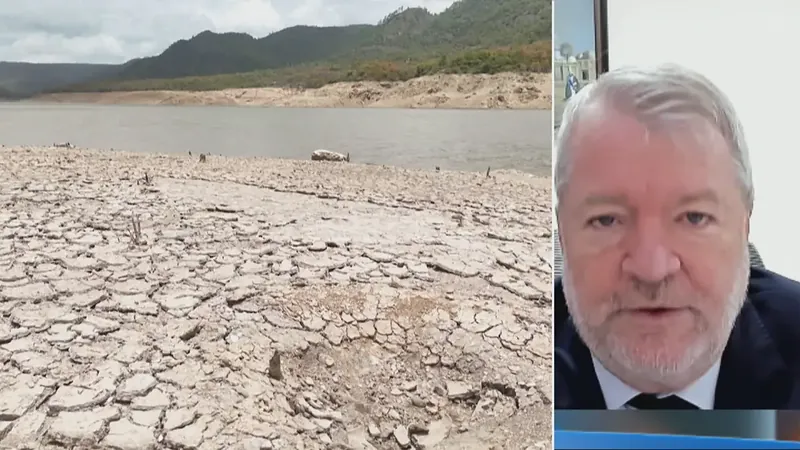
Peter Hawkins, the United Nations (UN) Coordinator for Iraq, said that climate change has long been harming people's lives and livelihoods across Iraq. According to Hawkins, rising temperatures, more frequent dust storms and declining rainfall are putting health, agriculture and clean water under heavy pressure. "The situation is getting harder every day," Hawkins said, adding that Iraq needs to carry out a detailed assessment to limit these changes.
Hawkins said excessive reliance on neighbourhood generators for electricity has pushed air pollution to "very high levels that may be completely unacceptable". He said he welcomed the Iraqi government's commitment to end the flaring of associated gas by 2030. He called for domestic gas to be used in power plants and for solar energy to be expanded.
Hawkins said the management of the Dîcle and Firat rivers and of groundwater has become a decisive issue. Iraq's Ministry of Water Resources had described 2025 as the worst drought year since 1933. Reserves in dams had fallen to 8 percent, and downpours in 2026 had partly improved the situation.
Hawkins said no direct assessment had been carried out in the provinces, including the Kurdistan Region, and that collecting data was "a difficult task". "Every province, including the Kurdistan Region, has been harmed in different but equal ways," he said. According to Hawkins, only about a third of the budget the UN needs for Iraq in 2026 has been secured.
Hawkins described the failure of the COP31 climate summit as "surprising". The summit ended two days late on Sunday, 22 November 2026, in the Turkish city of Antalya. No comprehensive agreement was reached at the summit, the first time this has happened since 2009. The European Union (EU) and some countries rejected a draft that made no mention of reducing fossil fuels. UN Secretary-General Antonio Guterres called the results "extremely disappointing".