Low costs revive sesame farming in Girê Spî
What happened?
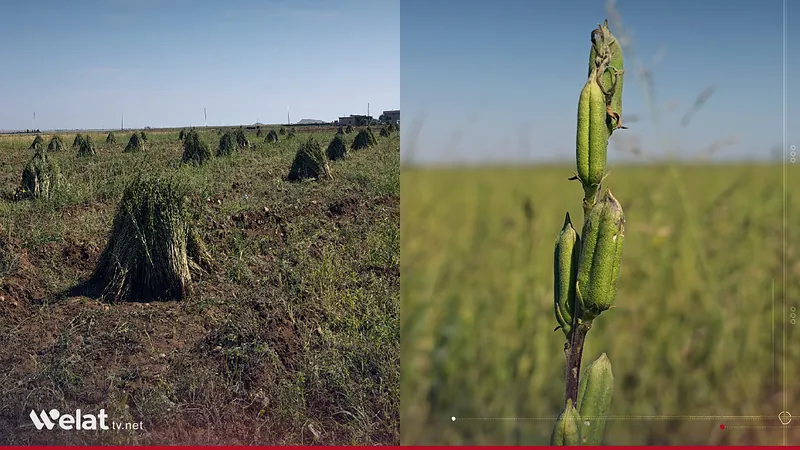
Sesame farming is reviving in the countryside of Girê Spî, in Raqqa province in (), after years of decline, with farmers increasingly turning to the crop. Sesame is seen as requiring less expense and labour than other crops. The shift comes as prices of fuel and production inputs rise.
Those working in agriculture hope the current season will boost their incomes. However, difficulties in marketing the crop and finding a fair price persist.
Sesame cultivation has spread markedly in recent years in parts of Raqqa province and in the Aleppo countryside, with some farmers planting it in place of cotton and yellow maize. Among the reasons are relatively low production costs, a degree of drought tolerance and a short growing period.
Mahmud, who works on the sesame harvest in the Girê Spî countryside, said work during the season consists of picking the crop and gathering it together. According to Mahmud, the sesame is left to dry before being sold to traders. He said sesame cultivation had returned to the area after a break of about a decade. Farmers had planted more sesame this year, he added, because it costs less to grow and provides a reasonable income. Mahmud also said daily wages were not enough to cover living expenses as prices rise. He said his own daily wage was about $10, adding that workers were waiting for wages to improve so that their earnings would match the cost of living.
Ahmed Balis, a grain and pulses trader, said the sesame season begins after the irrigated wheat harvest. According to Balis, solar power has allowed some farmers to work their land and secure water at lower cost. He said a tonne of sesame could reach around $1,200 at market prices.
Sesame trader Hamudi Aziz said that, in his assessment, sesame had spread in the area because it is easier to produce. Aziz said the price per tonne, previously between $700 and $800, had risen to around $1,500 depending on type and quality.
Still, stable earnings depend on actual cultivation costs, production conditions, selling prices and access to suitable markets.