9,000-year-old artefacts found in Hewlêr plain
What happened?
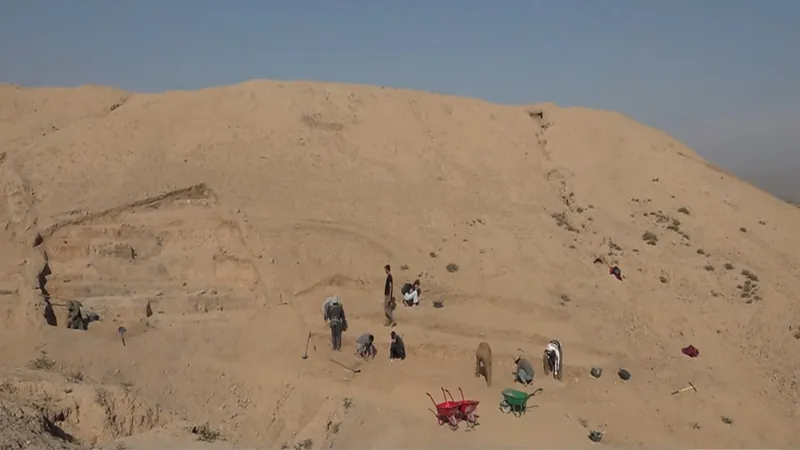
Archaeological excavations are continuing at the Eliyawe and Hêlawe mounds in the plain of , the capital of the Kurdistan Region. The work is being carried out together with the University of Milan in Italy. The latest finds reportedly bear important traces of the region's historical and civilisational past.
Analysis has shown that some of the finds date back about 9,000 years. The artefacts have been taken to specialist centres for scientific study.
Prof. Luca Peyronel, head of the excavation team, said the work at the two mounds had produced notable results. According to Peyronel, the excavations have given researchers valuable information about different historical periods of the plain. "In this area of the Erbil plain we found the remains of a building and a series of structures linked to farming and village life, dating back about 9,000 years," Peyronel said.
The excavations are part of scientific and cultural cooperation between the Kurdistan Region and Italy. The region's archaeological institutions and Italian universities are taking part in the work.
Tomas Sansoni, Italy's Consul General in Hewlêr, announced that Italian teams have carried out a total of 22 archaeological missions in Iraq. Sansoni noted that this number is remarkable on a global scale. The consul general described the cooperation as a source of pride for Italy and the Kurdistan Region. According to Sansoni, joint research by Italy, Iraq and the Kurdistan Region is of great importance for understanding the historical roots of the region. "The Erbil Citadel is the only place in the world where people have lived continuously for more than six thousand years," Sansoni said.
The excavations at Eliyawe and Hêlawe began in 2016. Finds relating to farming, settlement and village life have offered new information on how human communities formed in the plain about 9,000 years ago. Continued work could help researchers better understand the first settlements, the transformation of agriculture and the emergence of village communities, it was noted.