Hewlêr's Green Belt to get 1.8 million olive trees
What happened?
Karwan Mîskî, executive director of the Green Belt Project in , the capital of the Kurdistan Region, announced the new planting plan on Thursday, 19 November 2026. According to Mîskî, 1.8 million olive trees will be planted in the second phase of the project, in its second area. All of the trees are a Greek variety, and the saplings are being brought directly from Greece.
Mîskî said the saplings would not all be planted at once. Planting will be carried out in groups and stages according to the planting season, he said. He also explained that the imported saplings are one year old. According to Mîskî, it will take three years for the trees to bear fruit and start yielding a crop.
An olive oil factory within the Green Belt is also on the agenda. Mîskî said the idea was still at the planning stage and that no final decision had been taken on when work would begin. According to Mîskî, a decision on when the factory will be set up, its production capacity and other details will probably be made on Monday and Tuesday, 23 and 24 November.
Mîskî said work in the two phases had so far provided thousands of jobs for local young people and workers. He added that the factory would create new job opportunities in the future.
The second phase covers an area of 11,000 dunams. It begins at the village of Kezne on the main Hewlêr- road and in the Sîbîran area on the Hewlêr-Xebat road. Under the plan, 10 percent of the work in this phase is to be completed within a year. In the first phase, 700,000 saplings were planted over an area of 4,200 dunams.
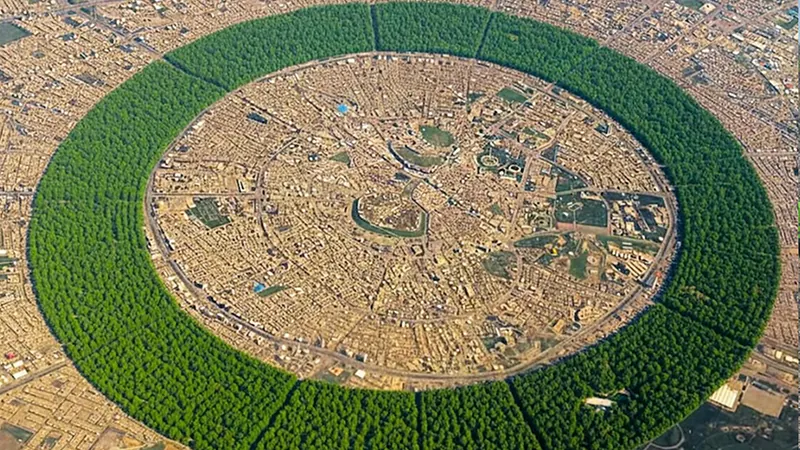
A green belt is a protective strip of trees surrounding a city. The project, which encircles Hewlêr for 78 kilometres, comprises a total of 7 million olive, pistachio and orange trees. The trees contribute greatly to blocking dust and soil and to cleaning the city's air. The project also reduces harmful gases by about 210,000 tonnes a year, helping the city's residents breathe healthier air.