Sculptor Osman Nîkmenîş turns wood and colour into memory in Sine
What happened?
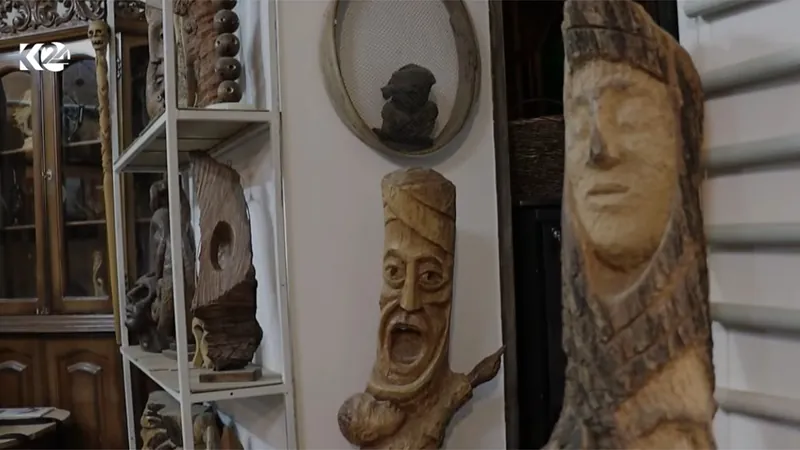
Kurdish sculptor and painter Osman Nîkmenîş keeps his permanent exhibition open to visitors in the city of in (). The venue, which brings together a gallery and a museum, houses decades of the artist's work. The pieces document the pain of war, the details of nature and moments from the artist's life.
Nîkmenîş began painting at a very young age and moved on to sculpture in 1985. In his early years he worked with clay and plaster, and also made large sculptures from concrete. Today he concentrates on wood carving, especially carved wooden spoons.
The artist said that his turn to wood was the result of “a pleasant coincidence”. By his account, one day a carpenter was about to throw a piece of pear wood into the fire. Nîkmenîş asked him not to burn it and to give it to him instead. He then began carving wood with a knife for the first time.
That first attempt produced the artist's first relief, “Shelter”. The work is inspired by people who fled to shelters during the fighting. In the relief, an elderly woman tenderly strokes the head of a smiling child, while her own face carries a heavy sorrow. Nîkmenîş still keeps the piece in his personal collection.
The artist devoted one period of his work to the suffering of war, particularly the and Anfal tragedies in (). In another period he carved nothing but spoons and opened the “Thousand Spoons Exhibition”. When he turned to nature, he carved mountain goats, fish and various other animals.
Nîkmenîş does not describe himself only as a sculptor. To those who ask, he replies: “I also say I am a painter; I have painted since I was little, for as long as I can remember.” He said he returns to the brush when he tires of sculpture or finds some free time.
The venue, called the “Nîkmenîş Gallery”, stands opposite the Refah store in Sine and is open to everyone free of charge. The works on display range from reliefs and calligraphy panels to highly realistic pieces and pure abstraction. The gallery also has a museum section with objects documenting the artist's life from childhood to old age.