Iraq's Federal Court also rejects Kurdistan Parliament case
What happened?
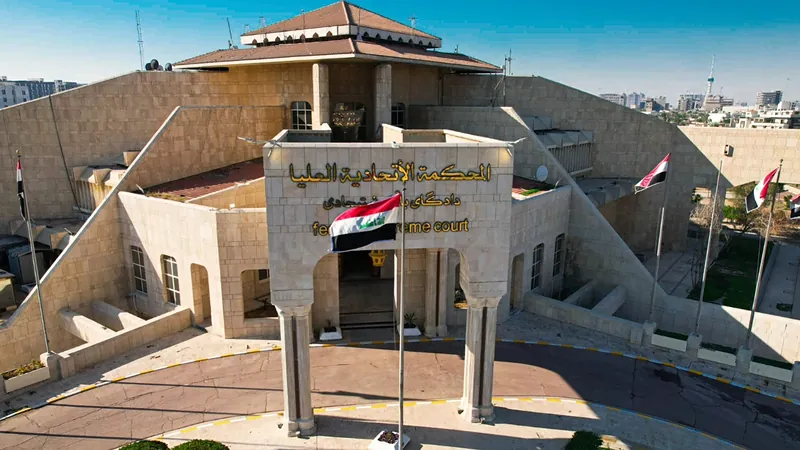
Iraq's Federal Supreme Court said it has rejected a case seeking to have the sixth term of the Kurdistan Parliament declared unconstitutional. The court announced the ruling in a statement issued on Wednesday, 18 November 2026.
According to the court's statement, case number 211/Federal/2026 had been registered on 26 October 2026. It was filed by Omêd Elî Hemesalih, an MP from the New Generation (Newey Nwê) faction, against Mihemed Silêman, the Kurdistan Parliament's speaker by seniority.
The statement said the session was chaired by the court's president, Judge Mundhir Ibrahim Hussein, with all judges taking part. The plaintiff had asked for the continuation of the sixth term to be declared unconstitutional, and had also requested that the necessary legal measures be applied following such a ruling.
The court based its decision on the first paragraph of Article 93 of Iraq's 2005 Constitution. According to the court, that paragraph covers only the review of laws and regulations in force, so the continuation of the sixth term falls outside its jurisdiction.
The court stated that determining the limits of its jurisdiction is a matter of public order, adding that it rules on this itself even if the parties do not raise it. On these grounds the case was dismissed unanimously. According to the court, the ruling is binding on all authorities under Article 94 of the constitution. The ruling was reportedly read out in open session.
Kurdistan Parliament elections were held on 20 October 2024. The parliament's first session was left open on 2 December 2024, and its presidium could not be elected for around two years. On 4 November 2026 the parliament convened with 52 MPs in attendance and elected its presidium. The Patriotic Union of Kurdistan (Yekêtiy Nîştimaniy Kurdistan, PUK), New Generation and other parties opposed to reactivating the parliament boycotted the session. These parties filed two cases against the reactivation, and Iraq's Federal Supreme Court rejected both.