Animal sighted in Sarıyer was not a lion, Istanbul governor's office says
What happened?
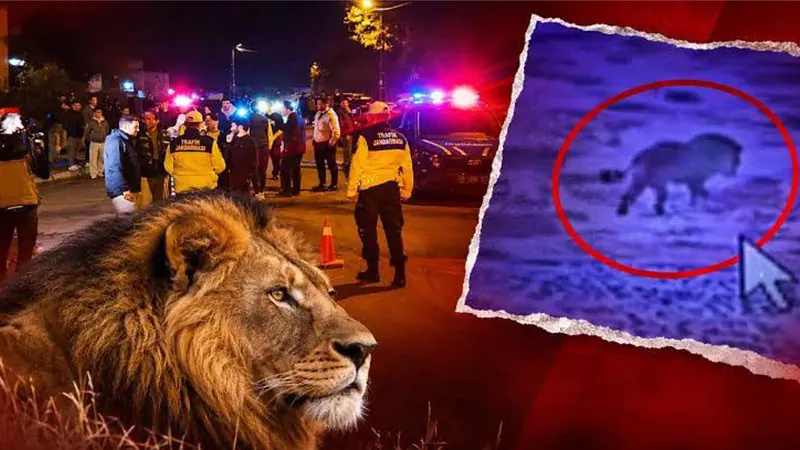
The Istanbul Governor's Office has announced that the animal filmed in Istanbul's Sarıyer district was not a lion. According to a comprehensive examination by the governor's office, the animal does not belong to any species of the big cat family either.
The incident began on the night of November 22, when a resident reported seeing a lion in a forested area in Sarıyer. Large numbers of gendarmes and commandos were then sent to the area. Teams from the Disaster and Emergency Management Authority (AFAD) and the General Directorate of Nature Conservation and National Parks were also deployed.
The search was carried out from the air with thermal drones and on the ground with foot patrols. Bait was left in the forest and camera traps were set up. Istanbul's well-known Belgrade Forest was also closed to vehicle and pedestrian access.
Despite the intensive effort, no concrete trace was found at the scene. On November 23, however, the teams received new footage recorded from different angles. The governor's office said that examining these recordings had established conclusively that the animal was neither a lion nor any other big cat.
The governor's office stated that it carefully assesses every report to protect citizens' lives. It also announced that the teams would remain on alert for any possible new information. The claims had unsettled local residents and become a talking point across Turkey.
Clause "l", added to the Animal Protection Law on July 9, 2021, bans dealings involving animals deemed dangerous by the Ministry of Agriculture and Forestry. The ban covers the breeding, ownership, feeding, sale, import and advertising of these animals. However, the ministry's circular No. 2021-48, dated December 7, 2021, lists only six dog breeds: Pitbull Terrier, Dogo Argentino, Fila Brasileiro, Japanese Tosa, American Staffordshire Terrier and American Bully. The lion is not on this list.
The ministry's regulation on keeping game and wild animals, by contrast, is worded in a way that could cover wild animals such as lions. The regulation makes keeping animals as a hobby conditional on compliance with legislation and international conventions. Further conditions are that the animals are not traded and that no directly taxable income is generated. For mammals, birds of prey and reptiles, a maximum of ten animals, including offspring, is permitted. For poultry, the limit is one hundred animals, including offspring. Aggressive, harmful and venomous species are excluded from this permission. This exception was added through an amendment to the regulation published on July 6, 2021.