Kurdistan Region round table tackles hate speech and coexistence
What happened?
A round-table meeting on hate speech was held in the Kurdistan Region to mark World Tolerance Day. Participants discussed the consequences of hate speech and the impact of the media on national and religious communities. They also talked about ways to combat such rhetoric and about the culture of coexistence.
The meeting was organised by the Kurdistan Regional Government (KRG) Office for the Coordination of International Recommendations, with support from the Surya and Masarat foundations and Cihan University. Participants said the media and social institutions bear responsibility in the fight against hate speech.
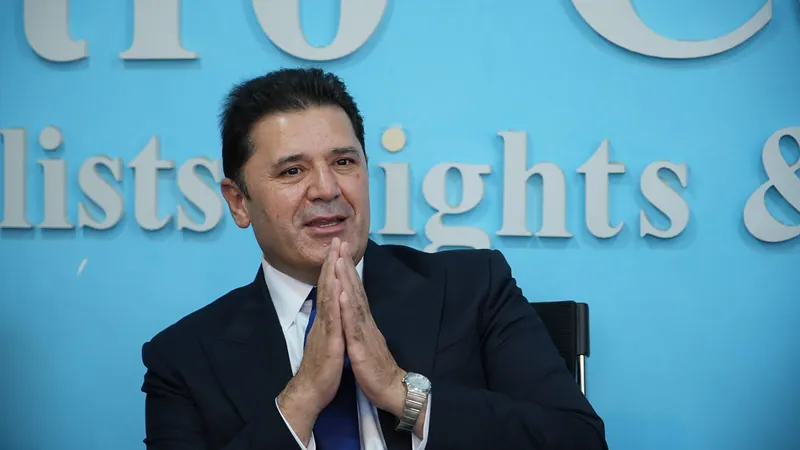
Dîndar Zêbarî, the KRG's coordinator for international recommendations, said combating hate speech is one of the main pillars of tolerance. According to Zêbarî, followers of eight different religions and denominations live in the region. He said Turkmens, Chaldeans, Syriacs, Assyrians and Armenians also live there.
Zêbarî recalled that the government adopted a charter on the rights of national and religious communities in 2003. He said 10 recommendations in this area were made at the 48th session of the UN Universal Periodic Review (UPR) process. According to the coordinator, the office has drawn up a directive against hate speech and sent it to all government institutions.
Zêbarî said these communities have been represented through a quota system since the first parliamentary elections in 1992. According to him, 1,995 students attend 19 Turkmen-language schools, where 285 teachers and staff work. Zêbarî said 50 Syriac-language schools have 6,690 students and 634 teachers and staff. The coordinator added that 24,369 students receive Ezidi religious education in Kurdish.
Zêbarî also said there are 6,224 mosques and 273 churches, shrines and monasteries in the region. According to him, there are also 325 religious sites belonging to Ezidis and other communities.
Zêbarî recalled that in 2014, following the attacks by ISIS, the region took in around two million displaced people and refugees. According to Zêbarî, 138,000 of them were Christians from the Plain in Nineveh province.