Kurdistan Regional Government unveils police reform strategy
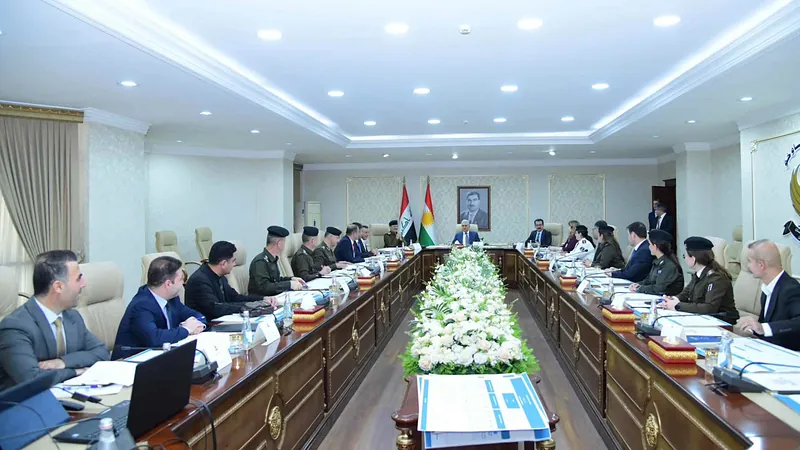
What happened?
The Kurdistan Regional Government (KRG) has announced the launch of a comprehensive, long-term reform process within the Kurdistan police. The process will be carried out under a five-year strategy covering the period from 2026 to 2030. According to the government's statement, the aim is to improve the professional capacity and services of the police. Strengthening trust between citizens and the police is also among the goals.
The government described the reform as a long-term institutional renewal. The goal is to build a professional and accountable police force that is bound by the law and protects human rights. The government said the reform would not be limited to changing structures and buildings: its scope also covers management style, professional conduct, human resources, the use of technology and service quality.
As a first step on the ground, four police stations were selected as "model stations": Kesnezan in province, Seywan in province, Nizarkê in province and Central in Helebce province. The stations' commanders were chosen on the basis of competence and experience. New training programmes, working procedures and service standards will be tested at these stations. The results will be assessed on the basis of data and evidence. Successful models will then be rolled out to all police stations in Kurdistan.
According to the government's statement, the relationship between the police and citizens rests on three concepts: power, respect and trust. Power means using authority in line with the law to protect citizens' lives and property and to fight crime. Respect covers fair treatment and protecting citizens' dignity, rights and privacy. Trust, in turn, arises from the combination of the two.
The government said citizens would have easier access to services and receive faster responses. Citizens will also be able to submit complaints and feedback.
The strategic framework contains 27 objectives, covering administrative reform, leadership development, digital transformation and institutional coordination.
The Kurdistan Region's Ministry of Interior owns the process and is responsible for it. The European Union Advisory Mission in Iraq (EUAM Iraq) and the United Nations Development Programme (UNDP) are contributing advisory services, technical support and capacity building.