Kurdish movement faces a democracy crisis, says Muslim Şêx Hesen
What happened?
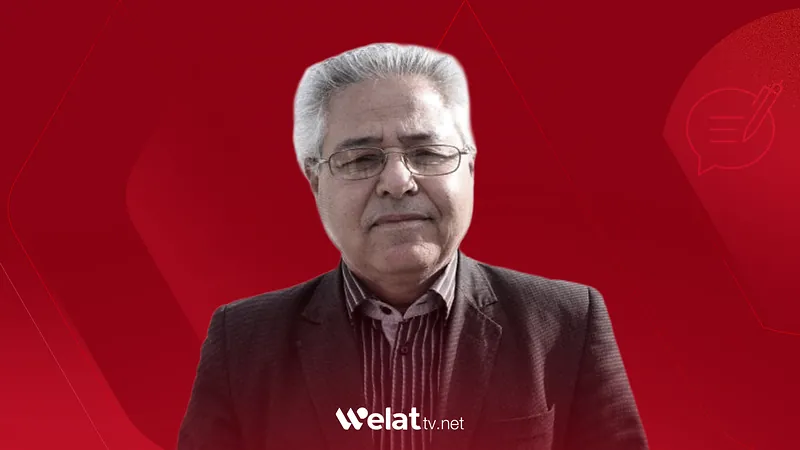
In an article dated 7 November 2026, writer Muslim Şêx Hesen, from in (), traced the crisis of the Kurdish political movement to a lack of democracy. In Hesen's view, the struggle for freedom and national rights cannot be separated from a genuine commitment to democracy.
The writer argued that the problem does not lie only in the large number of parties and political orientations. In his view, the real problem is the absence of a genuine democratic culture among many leaders. Hesen claimed that some actors run parties and institutions as if they were private property. He wrote that parties that raise the banner of democracy do not accept election results and refuse to remain in the minority.
The writer stated that the splits of recent decades were not merely temporary differences of opinion. According to Hesen, these splits often reflect a political and organisational inability to manage conflicts by democratic means. He argued that the divisions brought no real gain to the Kurdish cause but instead weakened political forces.
Hesen described the recent disputes between the two main parties in () as a source of real concern. In his view, the tension comes at a time when the region faces political, security and economic challenges.
For the writer, the way out of the crisis is not new statements but open acceptance of election results. He also saw recourse to constitutional institutions and respect for the principle of majority and minority as part of that path. Hesen stressed that the majority has the right to run institutions in accordance with the law, and the minority has the right to opposition and oversight. Hesen wrote: "Whoever does not respect democracy within his own party cannot build a genuine democratic project for his people."
The writer argued that the Kurdish movement must reassess its bitter experiences. He said the aim is not for all parties to adopt the same programme. In his view, the goal is to agree on democratic principles in order to manage differences. Otherwise, according to Hesen, the movement will remain in the same vicious circle, and future generations will pay the price.