Lebanese culture minister says Hewlêr has grown five to sixfold
What happened?
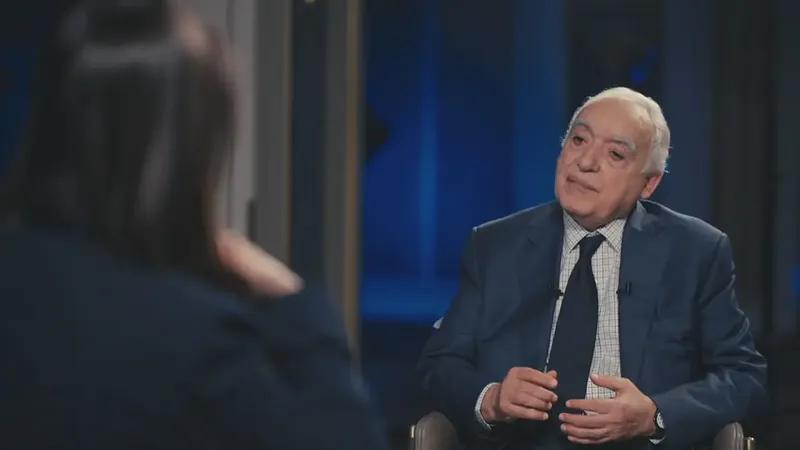
Lebanese Culture Minister Ghassan Salamé said he had returned to , the capital of the Kurdistan Region, after roughly a quarter of a century. Salamé said he had first visited the city in 2003. The minister came to Hewlêr to attend the Hewlêr International Book Fair and to meet with Kurdistan Democratic Party (KDP) KDP President Masoud Barzani.
According to Salamé, the size of the city has grown five or six times over 23 years. "There is almost no connection left between today's Hewlêr and yesterday's Hewlêr," the minister said. He noted that his last meeting with President Barzani had taken place in Paris. He said that meeting had taken place during the most intense period of the war against ISIS.
Salamé described artificial intelligence as "humanity's resignation from itself." He said artificial intelligence threatens many professions, including medicine, engineering, law and literature. According to him, the only thing that will continue to distinguish humans from machines will be emotion and morality. The minister claimed that in many developed societies, one in every three children cannot hold their attention for longer than 20 seconds. He argued that books are a remedy against this mental fragmentation.
Salamé said there is no obstacle to teaching Kurdish to Kurdish children in Lebanon. He said this was because education in Lebanon is largely in the hands of the private sector. The minister said that only one of the country's 52 universities is state-owned. He stated that his ministry would protect Kurdish historical artifacts just as it protects Ottoman and Mamluk artifacts.
The minister argued that managing pluralism is today the greatest test facing states. "There is no model that fits all countries," he said. He did not answer questions about the governance model in Iraq and Syria in detail. He said that, as a member of the government, this would be seen as interference in the internal affairs of those countries.
Salamé said he saw no positive sign regarding Israel's withdrawal from Lebanon. He also said he saw no positive sign regarding Hezbollah laying down its arms. According to Salamé, Israel occupies 7 percent of Lebanese territory.