Pezeshkian blames US for collapse of agreement
What happened?
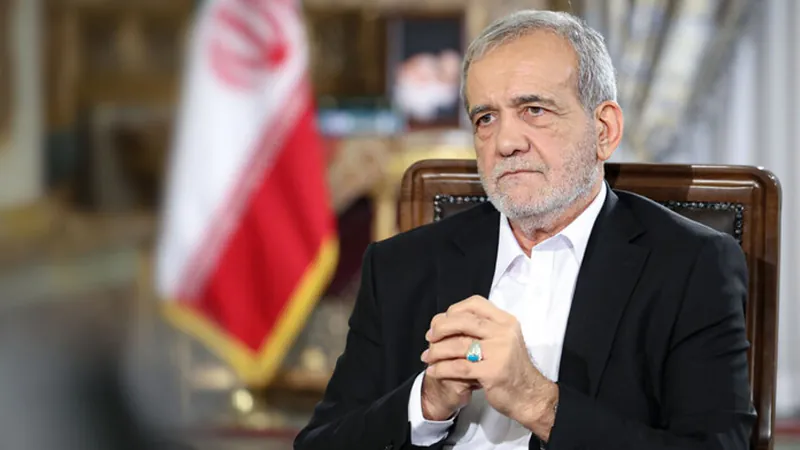
Iranian President Masoud Pezeshkian on Saturday, October 24, 2026, blamed the United States for the failure of the interim agreement. Pezeshkian nevertheless said he had not given up on seeking a deal:
“Despite this, I still believe we must move forward toward implementing the agreement. The negotiations were progressing, but the cowards turned everything upside down. Still, we must continue our efforts to reach an agreement.”
Pezeshkian was referring to the agreement signed between Washington and Tehran in June 2026. That agreement had collapsed completely only a few days after it was signed. What the Iranian president had in mind was reviving that agreement.
The statement came at a time of growing claims and leaked information that the US and Israel are preparing for a new phase of military operations against Iran. Pezeshkian's message followed a statement by US President Donald Trump on the evening of Friday, October 23, 2026. Trump had said his country was holding constructive negotiations with Iran. Trump had also said the US would not attack Iran before the November 3 congressional midterm elections.
Suzanne Maloney, director of the foreign-policy program at the Brookings Institution, argued, however, that attacks were quite likely to come immediately after the elections. Maloney pointed to the US sending more military equipment and forces to the Middle East as a sign. She also cited the warnings issued to American citizens in the region and the Israeli army's raising of its alert level. According to Maloney, Trump's remarks that there would be no attack before the elections are linked to the fact that such an attack would do nothing to help his position in the elections.
Officials in Tehran, for their part, have repeatedly said they are ready to respond to a possible attack. The officials also warned that they could deliver unexpected responses that could target undersea internet cables and US military bases in the region. A US intelligence report also warned US Secretary of State Marco Rubio that American diplomats and officials in the Middle East could be targeted.