Robariya villagers in Derik plough land seized under Arab Belt
What happened?
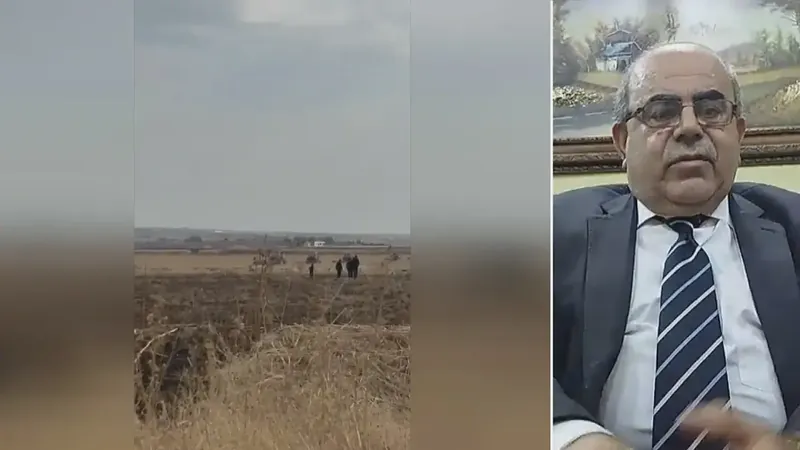
Following the fall of the Assad regime, residents of Robariya, a village in the Derik district of province in (), went to their land that had been given to Arabs 50 years earlier. The villagers' wish to plough the land led to tension. Asayish forces intervened.
The land had been confiscated from Kurds under the Baath regime as part of the "Arab Belt" plan.
According to Ebdulhelîm, known in the village as Bavê Zana, the villagers went with tractors to the land held by the "Xemer Arabs". Locals use this name for the Arabs who were moved from central Syria and settled in Rojava during the Assad era after dam waters flooded their villages. The villagers ploughed about 250 to 300 sacks of land. A sack is a unit of land measurement specific to the region.
Bavê Zana said Asayish forces then went to the villagers and asked them to stop ploughing to prevent clashes and unrest. He said the Asayish forces promised to pursue the case officially. He described the villagers' stance as follows: "But our people also said firmly that they will never allow the Xemer Arabs to plough our land."
Bavê Zana said Robariya is an old, large village where about 200 families live. He said the total land, together with six villages including Sencaq, Jêlik and Kêşkê, amounts to about 3,000 sacks. He said the Syrian regime confiscated the land in 1974 and 1975 through a chauvinist decision. "The state had issued official ownership documents (title deeds) for 64 families in our village, and we still have these documents," Bavê Zana said.
According to Bavê Zana, the state brought about 104 Arab families to the area, but only 40 to 50 families stayed. He said 15 to 20 Arab families remain in the village today. Bavê Zana claimed that these families rent out the land or try to sell it at very low prices. He said local people have decided that no one should buy this land.
Bavê Zana recalled that the villagers also put up great resistance during the 2004 uprising in , in Hesekê province. He called for unity among all villages affected by the Arab Belt plan.