The nation state and the Kurdish question
What happened?
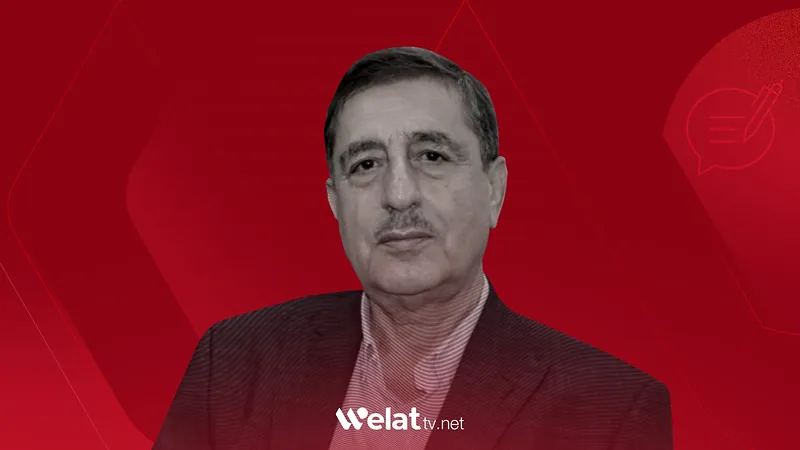
Feysel Yûsif, general coordinator of the Kurdish Reform Movement in Syria, has argued that the Kurdish question in Syria cannot be separated from the constitutional foundations of the new state. In an article, Yûsif wrote that rapid transformations in the Middle East have put the nation-state model to the test.
According to Yûsif, the Kurdish people were divided among several states after the First World War. The author argued that most of these states saw Kurdish identity as a threat to national unity. Yûsif said policies of denial and assimilation had not brought stability but had instead allowed injustices to pile up.
Yûsif also listed discriminatory policies applied to Kurds in Syria. Foremost among them is the exceptional census carried out in 1962 in province in (). According to Yûsif, the census deprived large numbers of Kurds of Syrian citizenship. The author also cited the Arab Belt project and Arabisation practices as examples.
Yûsif said that after the collapse of the Assad regime, the Kurdish question cannot be reduced to temporary administrative or security arrangements. In the author's view, the Kurds' national existence, language and culture must be constitutionally guaranteed. Yûsif also said political and administrative decentralisation would not weaken the country's unity and sovereignty.
Yûsif recalled that Kurdish political forces converged on a shared vision of their demands at a conference on 26 April 2025. According to the author, the conference also formed a delegation to negotiate these demands. Yûsif called on the transitional government and Syrian political forces not to postpone the Kurdish question. The author said Decree No. 13 could serve as a basis for the constitutional guarantee of rights.