Region
Southern Kurdistan
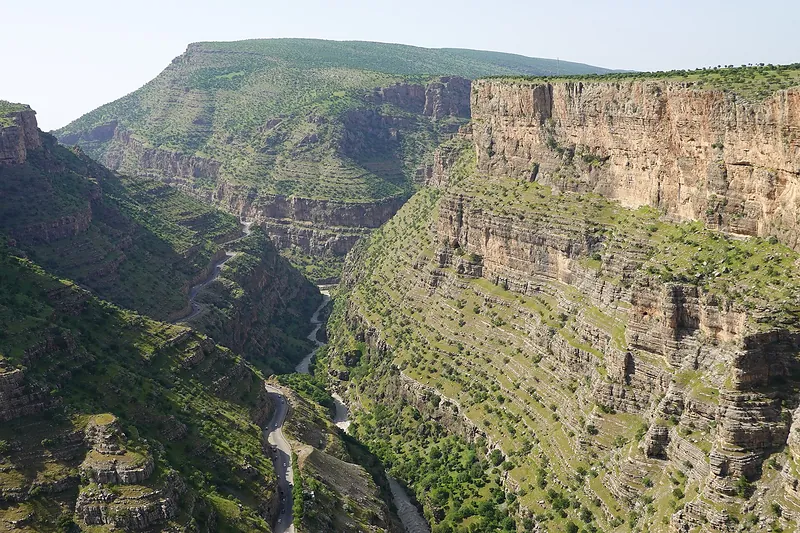
Başûr is the name Kurds give to the part of Kurdistan inside Iraq, and the word means "south" in Kurdish. Together with Northern Kurdistan (Bakur), Western Kurdistan (Rojava) and Eastern Kurdistan (Rojhilat), Southern Kurdistan is one of the four parts of Kurdistan. Most of the land of Southern Kurdistan is administered by the Kurdistan Region, whose capital is Hewlêr. The Kurdistan Region consists of the Hewlêr, Silêmanî, Dihok and Helebce governorates and is recognised by the Iraqi constitution as a federal region. Kerkûk, the Şingal district of Nineveh Governorate, the Xaneqîn district of Diyala Governorate, Mexmûr and the Nineveh Plains are disputed areas outside the Kurdistan Region's administration. Article 140 of the Iraqi constitution provides for the future of the disputed areas to be settled by a census and a referendum.
The Baban, Soran and Behdînan emirates ruled in Southern Kurdistan until the middle of the 19th century. Şêx Mehmûd Berzincî proclaimed the Kingdom of Kurdistan in Silêmanî in 1922. Mele Mistefa Barzani was elected, while in exile, president of the Kurdistan Democratic Party (Partiya Demokrat a Kurdistanê, KDP) in 1946. The September Revolution, led by Mele Mistefa Barzani, began on 11 September 1961 and ended after the Algiers Agreement of 1975. Celal Talabani founded the Patriotic Union of Kurdistan (Yekêtîy Nîştimanîy Kurdistan, PUK) in 1975. The Baath government carried out the Anfal campaign in 1988 and bombed Helebce with chemical weapons on 16 March 1988. After the uprising (Raperîn) of March 1991, the Kurdistan National Assembly was founded through the elections of 19 May 1992.
Peshmerga forces fought against ISIS from 2014 onwards. In 2016 the UN Commission of Inquiry on Syria found that ISIS had been committing genocide against the Êzîdîs of Şingal since August 2014. In the independence referendum held in the Kurdistan Region on 25 September 2017, 92.73 per cent of those who voted said yes. Iraqi government forces took control of Kerkûk on 16 October 2017. Alongside Kurds, Turkmens, Arabs, Assyrians, Chaldeans and Armenians live in Southern Kurdistan. Southern Kurdistan is also home to Êzîdî, Kakeyî and Christian communities. The economy of the Kurdistan Region relies heavily on oil, and oil revenue and the region's share of the federal budget remain a lasting dispute between Hewlêr and Baghdad.
Read more in the KRD21 encyclopedia
Related news
- Pêşewa Hewramanî says Iraqi delegation to visit HewlêrHewramanî announced that a delegation from the Iraqi government will come to Hewlêr to discuss the budget with Kurdistan Region Prime Minister Masrour Barzani.
- Kurdistan Region administration calls for implementation of Şingal agreementAccording to Rêber Ahmed's statement, progress has been made in talks to choose a new district administrator for Şingal, and concrete steps are expected from the federal government.
- President Barzani and Philippine ambassador discuss terrorism threatDuring the meeting, the two sides assessed the impact of the threat of terrorism on regional and global security. They also discussed the fight against terrorism.
- President Barzani sends condolences to Jordan's kingSeven people were reported killed and 34 wounded in an attack on a church in Karak governorate.
- Kurdistan Region and Iraq move to finalise 2027 budgetThe draft cuts the Kurdistan Region's budget share from 14.67 percent to 12.67 percent, while Kurdish factions have announced they will not vote for it.
- Iraqi PM Ali Zeydi says no weapons will remain outside the stateAccording to Zeydi, the weapons issue has been resolved with three groups, talks continue with four groups, and the YBŞ forces in Şengal will join the Hashd al-Shaabi.
- Kurdistan Region government condemns church attack in JordanAccording to a statement by the Kurdistan Region Government, the attack is a clear violation of humanitarian values and the principles guaranteeing freedom of worship.
- Kakayi: 10 candidates apply for Şingal district governor postAccording to Ninova Provincial Council member Muhammed Kakayi, all 10 candidates who applied for the district governor post are from Şingal.
- Police reform process begins in Kurdistan RegionAccording to Mîranî, the reform process will cover the local police, traffic and civil defence units.
- Kurdistan Region and EU stress continued humanitarian cooperationTalks attended by Dilawer Xalid Ajgeyî, the Kurdistan Regional Government's representative to the EU and a member of the delegation, covered continued aid for refugees and the use of technology for rapid disaster response.