Region
Southern Kurdistan
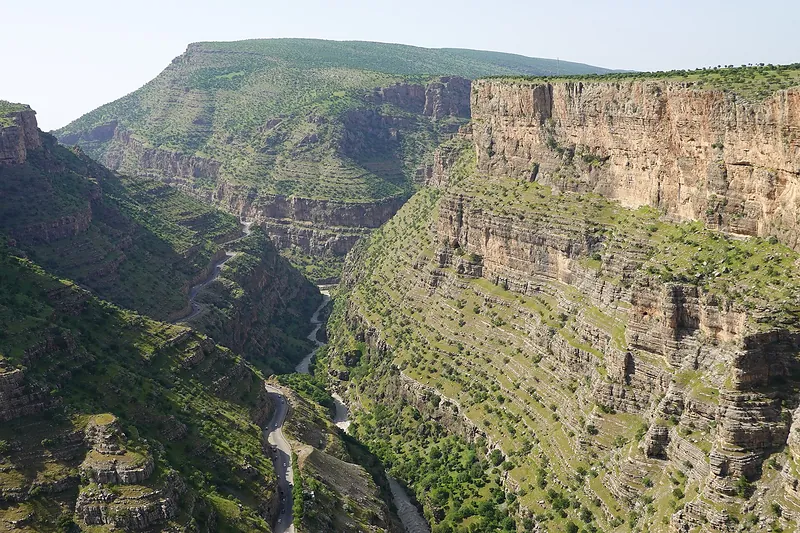
Başûr is the name Kurds give to the part of Kurdistan inside Iraq, and the word means "south" in Kurdish. Together with Northern Kurdistan (Bakur), Western Kurdistan (Rojava) and Eastern Kurdistan (Rojhilat), Southern Kurdistan is one of the four parts of Kurdistan. Most of the land of Southern Kurdistan is administered by the Kurdistan Region, whose capital is Hewlêr. The Kurdistan Region consists of the Hewlêr, Silêmanî, Dihok and Helebce governorates and is recognised by the Iraqi constitution as a federal region. Kerkûk, the Şingal district of Nineveh Governorate, the Xaneqîn district of Diyala Governorate, Mexmûr and the Nineveh Plains are disputed areas outside the Kurdistan Region's administration. Article 140 of the Iraqi constitution provides for the future of the disputed areas to be settled by a census and a referendum.
The Baban, Soran and Behdînan emirates ruled in Southern Kurdistan until the middle of the 19th century. Şêx Mehmûd Berzincî proclaimed the Kingdom of Kurdistan in Silêmanî in 1922. Mele Mistefa Barzani was elected, while in exile, president of the Kurdistan Democratic Party (Partiya Demokrat a Kurdistanê, KDP) in 1946. The September Revolution, led by Mele Mistefa Barzani, began on 11 September 1961 and ended after the Algiers Agreement of 1975. Celal Talabani founded the Patriotic Union of Kurdistan (Yekêtîy Nîştimanîy Kurdistan, PUK) in 1975. The Baath government carried out the Anfal campaign in 1988 and bombed Helebce with chemical weapons on 16 March 1988. After the uprising (Raperîn) of March 1991, the Kurdistan National Assembly was founded through the elections of 19 May 1992.
Peshmerga forces fought against ISIS from 2014 onwards. In 2016 the UN Commission of Inquiry on Syria found that ISIS had been committing genocide against the Êzîdîs of Şingal since August 2014. In the independence referendum held in the Kurdistan Region on 25 September 2017, 92.73 per cent of those who voted said yes. Iraqi government forces took control of Kerkûk on 16 October 2017. Alongside Kurds, Turkmens, Arabs, Assyrians, Chaldeans and Armenians live in Southern Kurdistan. Southern Kurdistan is also home to Êzîdî, Kakeyî and Christian communities. The economy of the Kurdistan Region relies heavily on oil, and oil revenue and the region's share of the federal budget remain a lasting dispute between Hewlêr and Baghdad.
Read more in the KRD21 encyclopedia
Related news
- Hewlêr agriculture directorate says rains benefited farmingAccording to a statement by Hîmen Seyid Murad, damage among livestock breeders in rural areas was limited to very few individual cases, while an expert commission was formed to examine the damage caused by the floods.
- Nechirvan Barzani orders aid for flood-affected residentsIn a phone call with Hewlêr Governor Omed Khoshnaw, Nechirvan Barzani ordered help for those affected and a clean-up after the flood.
- Silêmanî to host 5th fine arts symposium with artists from Kurdistan's four partsAccording to a statement by Bextiyar Seîd, the symposium will last seven days and will offer participants a three-stage program consisting of workshops, an exhibition and field trips.
- Hewlêr water department director Raber Hüseyin says turbidity levels are fallingAccording to Raber Hüseyin, the turbidity level dropped from 12,400 units to 10,500, and the stations will resume full capacity once it falls to 1,000-1,500 units.
- Hewlêr governor declares Sunday school holiday over floodingAccording to Xoşnaw's statement, department directors were authorized to exempt employees whose homes were flooded, or who could not reach work in the morning due to transport difficulties, from absence records and to count this as official leave.
- Silêmanî governor pledges support to HewlêrSilêmanî Governor Hêval Ebûbekir called Hewlêr Governor Omîd Xoşnaw by phone the same night, reiterating his offer of support and coordination, as heavy rain flooded some neighborhoods in Hewlêr.
- Hewlêr governor urges residents to clear streets immediatelyAccording to Umêd Xoşnaw, the aim of the call was to allow search and rescue teams to reach areas where water had accumulated.
- Kurdish detainee died in Baghdad without being taken to hospital, fellow prisoners sayAccording to the prisoners held together with him, Kılıç died after suffering two heart attacks, without being taken to hospital.
- Bayraktar says Kerkûk-Baniyas pipeline poses no economic threat to TurkeyAccording to Bayraktar, joint efforts in energy and mining are playing an important role in establishing peace, prosperity and stability in Syria and the region.
- Al-Tamimi says Kurdistan Parliament session was legalAl-Tamimi recalled that the Iraqi Federal Supreme Court's interpretive ruling established that there is no provision allowing secession from the federal system.
- Security forces say two killed in armed brawl in KerkûkAccording to security forces, an argument between young men drinking alcohol in a park and two men in a car turned into an armed clash, leaving four people wounded.
- Kurdish rice cultivation area in Dihok doublesDue to increased rainfall, the area planted with Kurdish rice in Dihok rose from 15,000 donums to 30,000 donums, with production expected to reach around 50,000 tons.
- Hewlêr Civil Defence says it is ready for rain spellCitizens can call the free 115 and 125 hotlines, open 24 hours a day, in emergencies or when water enters homes, Seîd said.
- Meteorology directorate warns of local floods in Kurdistan RegionRising water levels and local floods are expected particularly around Silêmanî and Hewlêr, according to a statement by the Kurdistan Region General Directorate of Meteorology and Seismology.
- Hariri calls for one Kurdistan and one regionAccording to Hariri, had parliament not resumed work, the Kurdistan Region would have faced legal problems with Baghdad.
- KDP lawmaker Kejo says party does not want a cabinet without the PUKAccording to Kejo, the KDP is open to dialogue without vetoing any party, but does not want to form the new cabinet without the Patriotic Union of Kurdistan.
- Rain wave set to hit the Kurdistan RegionAbundant rainfall this year will allow farmers to prepare for wheat sowing, according to meteorology expert Şalaw Hîdayet.
- Silêmanî's Sînemaçî project continues with two film screeningsAccording to project manager Sîna Mihemed, the art centre serves as a learning academy and a cultural centre in addition to hosting film screenings.
- Emirati singer Ahlam says she was honoured to sing for KurdistanThe song 'Watan al-Hub', which Ahlam dedicated to the Kurdistan Region, has reportedly become one of the most shared pieces of content in Iraq and the Gulf countries.
- Bafel Talabani sends message on leaving the governmentBafel Talabani said that if a government is formed he will set up the same posts in Silêmanî as well, and that he will not allow a single drop of the Kurdistan people's blood to be shed.