Region
Eastern Kurdistan
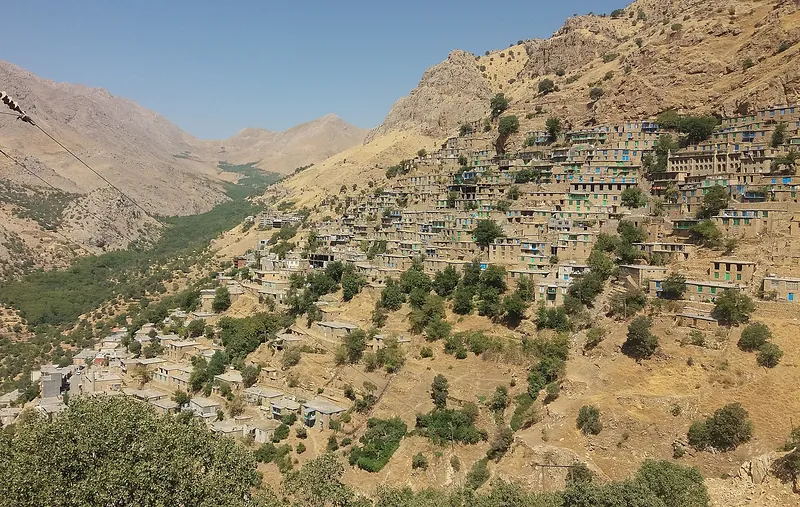
Eastern Kurdistan (Rojhilat) is the part of Kurdistan inside Iran. In Kurdish, the word rojhilat means "east". Rojhilat stretches along the Zagros Mountains from the area around Lake Wirmê in the north to Îlam in the south. Rojhilat borders Turkey and Iraq to the west. No single administrative unit in Iran corresponds to Rojhilat. Iran's Kurdistan, West Azerbaijan, Kirmaşan and Îlam provinces form the core of Rojhilat. The largest cities of Rojhilat include Kirmaşan, Wirmê, Sine, Îlam, Bokan, Mehabad and Seqiz. According to a 2025 note by the UK Home Office, estimates of the Kurdish population of Iran range from 7 to 15 million.
Soranî, Kurmancî, Southern Kurdish, Hewramî and Lekî are spoken in Rojhilat. In 2021 UNESCO added the Cultural Landscape of Hewraman/Uramanat, with its terraced Hewramî villages, to the World Heritage List. Most Kurds of Rojhilat are Sunni Muslims; Shia Kurds live in Kirmaşan and Îlam provinces, and Kirmaşan province is also home to Kurds of the Yarsan faith. The Erdelan and Mukriyan emirates stand out in the history of Rojhilat. Simko Şikak controlled the lands west of Lake Wirmê between 1918 and 1922. Qazî Mihemed proclaimed the Republic of Kurdistan in Mehabad on 22 January 1946. The Iranian army entered Mehabad in December 1946, and Qazî Mihemed was executed on 31 March 1947.
After the 1979 revolution, war broke out between Kurdish organisations and Iran's new government. Two secretaries-general of the Democratic Party of Iranian Kurdistan (Hîzbî Dêmokratî Kurdistanî Êran, PDKI) were killed abroad: Ebdurehman Qasimlo in Vienna in 1989 and Sadiq Şerefkendî in Berlin in 1992. Kurdish is not a language of instruction in the schools of Rojhilat, and Kurdish political parties are banned in Iran. Human rights organisations regularly document executions of Kurdish political prisoners and the killing of kolbars, the porters who carry goods across the border. The death of Jîna Emînî from Seqiz in morality-police custody in Tehran in September 2022 set off protests that spread across Iran under the slogan "Jin, Jiyan, Azadî".
Read more in the KRD21 encyclopedia
Related news
- Behzad Mehmûdî from Merîwan missing for nearly 100 daysAccording to information the court gave the family, Behzad Mehmûdî crossed the Seyranben border gate at the time contact with him was lost; Kurdish parties from Rojhilat based in the Kurdistan Region have denied that Behzad contacted them or is with them.
- Diyar Hacî Resûlpûr transferred to prison in Bokan to serve six-month sentenceAccording to a statement by Hana Human Rights, the eight-month sentence handed to Resûlpûr was reduced to six months because he accepted the court's ruling.
- Behzad Nurmuhammedi says bus crash in İlam kills 9According to information provided by Behzad Nurmuhammedi, the death toll in the crash was confirmed at 9, with 15 injured, who were taken for treatment at hospitals in the region.
- Kawe Kurdistanî transferred to Greater Tehran Prison, KHRN saysKawe Kurdistanî has been denied access to a lawyer and family visits, and no information could be obtained about the charges against him, KHRN said in a statement.
- Local sources report more troops after attack in BokanAccording to Hana's report, a drone was allegedly seen over the villages of Paşbilax, Qerelî, Haşîawa and Terexe after the attack, and forces affiliated with the Islamic Revolutionary Guard Corps allegedly took up position in the sports hall.
- 10 towns in Sine have no public libraryAccording to Hansar, library buildings whose construction had begun in some towns could not be completed because no budget was allocated.
- Seven Kurdish doctors to be honoured at Arab League headquartersAccording to Derbendî, three of the seven Kurdish doctors to be honoured are women, and one will be unable to attend the ceremony for personal reasons.
- Poets gather in Bane for fourth “Wêrekanî Xezelwer” meetingAt an event organised by the Bane Poetry and Literature Association, the annual Wêrekanî Xezelwer award went to three poets and writers, and plaques of honour were presented to members of the association.
- Worker dies of electric shock in Tekab, Hana Human Rights saysWorker Celîl Weysî, a married father of two, was killed by an electric current while working in a building, Hana Human Rights said.
- Border guard Wehîd Seferî died by suicide, Hana Human Rights saysAccording to a report by Hana Human Rights, constant pressure from the command and a forced transfer were among the reasons for the suicide, and no further details about the incident could be obtained.
- Farmer in Seqiz grows rice for first time despite mountain climateThe 500 kilograms of produce that Mensûr Seadet obtained in three months on a plot of no more than two dönüms also drew the village's farmers toward rice.
- Turkish parliament ratifies Mecca agreementAccording to a joint statement by the three countries, the agreement aims to strengthen the capacity for a joint response to any form of external attack on any of the parties.
- Cemîle Mihemedemîn Azer detained in Bokan, according to KurdpaCemîle Mihemedemîn Azer has reportedly been denied access to her lawyer and family since her detention, and her fate remains unknown.
- Six Kurds detained in Bokan and Pîranşar, Kurdpa saysThe fate and whereabouts of the detainees are unknown; they have reportedly been denied access to a lawyer, family visits and communication.
- KHRN confirms identities of at least 20 Kurdish religious prisoners in WirmêAccording to KHRN, the prisoners are serving sentences ranging from 6 months to 10 years and one day, and most are denied furlough, parole and medical treatment outside prison.
- Mehmûd Pîle detained in Mîyandwaw, Kurdpa saysThe young Kurd was reportedly detained arbitrarily without any legal document being shown and has been denied access to his lawyer and family.
- South Korea to deploy forces near Strait of Hormuz, drawing Tehran warningSeoul says the forces it will send near the Strait of Hormuz are meant not to join the Iran war but to protect commercial shipping and secure energy supplies.
- Water shortage threatens Enber Bo rice production in ÎlamThe area planted with rice in Sîrwan has exceeded 1250 hectares, and around 4000 tonnes of white rice are expected to be produced, according to Alireza Tulabi, head of the Îlam Province Agricultural Jihad Organization.
- Hana says Hadi Cemalipur dismissed after demanding his salaryAccording to Hana Human Rights, Cemalipur was accused by the Birjand Intelligence Office of propaganda against the system and in favor of Israel.
- Lightning strike kills two in Îlam, crisis management saysAccording to Ali Muhammed Pakdelnejad, director general of the Îlam Province Crisis Management, lightning that struck a group in Bedre district killed two people, while one person was injured in Zerne in Eywan district.