Region
Southern Kurdistan
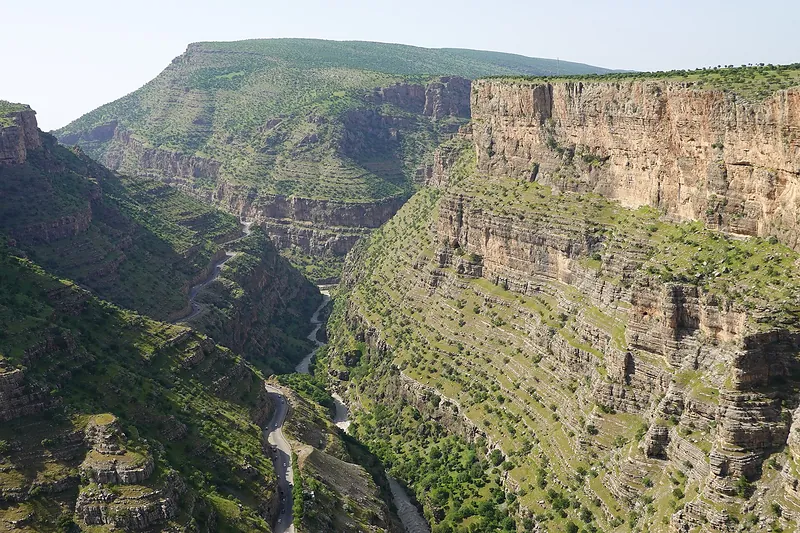
Başûr is the name Kurds give to the part of Kurdistan inside Iraq, and the word means "south" in Kurdish. Together with Northern Kurdistan (Bakur), Western Kurdistan (Rojava) and Eastern Kurdistan (Rojhilat), Southern Kurdistan is one of the four parts of Kurdistan. Most of the land of Southern Kurdistan is administered by the Kurdistan Region, whose capital is Hewlêr. The Kurdistan Region consists of the Hewlêr, Silêmanî, Dihok and Helebce governorates and is recognised by the Iraqi constitution as a federal region. Kerkûk, the Şingal district of Nineveh Governorate, the Xaneqîn district of Diyala Governorate, Mexmûr and the Nineveh Plains are disputed areas outside the Kurdistan Region's administration. Article 140 of the Iraqi constitution provides for the future of the disputed areas to be settled by a census and a referendum.
The Baban, Soran and Behdînan emirates ruled in Southern Kurdistan until the middle of the 19th century. Şêx Mehmûd Berzincî proclaimed the Kingdom of Kurdistan in Silêmanî in 1922. Mele Mistefa Barzani was elected, while in exile, president of the Kurdistan Democratic Party (Partiya Demokrat a Kurdistanê, KDP) in 1946. The September Revolution, led by Mele Mistefa Barzani, began on 11 September 1961 and ended after the Algiers Agreement of 1975. Celal Talabani founded the Patriotic Union of Kurdistan (Yekêtîy Nîştimanîy Kurdistan, PUK) in 1975. The Baath government carried out the Anfal campaign in 1988 and bombed Helebce with chemical weapons on 16 March 1988. After the uprising (Raperîn) of March 1991, the Kurdistan National Assembly was founded through the elections of 19 May 1992.
Peshmerga forces fought against ISIS from 2014 onwards. In 2016 the UN Commission of Inquiry on Syria found that ISIS had been committing genocide against the Êzîdîs of Şingal since August 2014. In the independence referendum held in the Kurdistan Region on 25 September 2017, 92.73 per cent of those who voted said yes. Iraqi government forces took control of Kerkûk on 16 October 2017. Alongside Kurds, Turkmens, Arabs, Assyrians, Chaldeans and Armenians live in Southern Kurdistan. Southern Kurdistan is also home to Êzîdî, Kakeyî and Christian communities. The economy of the Kurdistan Region relies heavily on oil, and oil revenue and the region's share of the federal budget remain a lasting dispute between Hewlêr and Baghdad.
Read more in the KRD21 encyclopedia
Related news
- University student dies at graduation ceremony in HewlêrAccording to her family, Zîlan Deştî had suffered from a hole in the heart since childhood and had travelled to Jordan and India for treatment.
- Baghdad asks Hewlêr to pay for kerosene, Dilan Xefûr saysAccording to Dilan Xefûr, the first batch of 50 million litres of kerosene will be shared out among the provinces according to the number of families, with each family receiving 50 litres.
- Iraqi army starts building headquarters outside girls' school in KerkûkThe unit is pressing ahead with construction despite requests from the Kerkûk Governorate and the Provincial Council to halt it, while local residents and the sub-district administration demand that the work be stopped immediately.
- Bottled gas price falls in Hewlêr, Xidir Celal saysPrices rose after the attack on Kormor, and sufficient gas stocks in storage depots brought them back down, according to Xidir Celal, a gas distribution agent in Hewlêr.
- Laliş Centre praises President Barzani and Peshmerga for Şingal roleAccording to the centre's statement, most Ezidis are still living displaced in camps, and instability is preventing them from returning home.
- Hiner Selîm's novel Konsêrt bo Keran published in HewlêrTranslated from French into Kurdish, the novel tells the suffering of the Kurdish people through a character named "Aza".
- Kerkûk in limbo as Baghdad problems block governor appointmentAsa'ib Ahl al-Haq Secretary-General Qais al-Khazali is reported to have blocked the appointment of Qahtan Wandawi, the Turkmen consensus candidate, as governor.
- Shia side broke governorship deal, says Hesen MecîdAccording to Mecîd, the Shia side has made it a condition that the new governor come from the Shia Turkmen community, as the administrative vacuum in the Kerkûk governorship passes 27 days.
- New shortcut road in Hewlêr's Çoman to serve tourists and farmersThe new two-kilometre road will shorten access to National Park and make travel easier for tourists and farmers, according to Çoman district commissioner Ehmed Barzan Elîko.
- Iraqi oil ministry awaits Kurdistan Region's move on keroseneAccording to Hewlêr Governor Omêd Xoşnaw, Baghdad has approved only 50 million litres, or 14 percent, of the 290 million litres of kerosene the Kurdistan Region needs.
- PM Masrour Barzani urges parties to join talks on new cabinetWith the Kurdistan Parliament back at work, Masrour Barzani called on all political parties to return to parliament and join the talks on forming a new cabinet.
- Salahaddin University-Hewlêr begins its 45th graduation ceremonyAccording to Rector Kamran Yunis, 5,347 students are receiving diplomas at the ceremonies: 4,094 undergraduates and 1,253 postgraduates.
- Dihok governor Elî Tetar says new roads will draw investmentDihok Governor Elî Tetar says new road projects will attract investment and revive tourism in the area.
- Kurdistan Communist Party calls for popular movement to defend region's unityAccording to the Kurdistan Communist Party's Political Bureau, the protests aim to defend the territorial integrity of the Kurdistan Region and to protect its existence and constitutional gains.
- Kerkûk council set to choose governor on ThursdayA session postponed over objections to Qahtan al-Wandawi, the Turkmen Front's candidate, was cancelled for lack of a quorum. Under the agreement reached, the Turkmen Front will run the province for about 40 days, after which a governor from the Arab component will be elected.
- Basim al-Badri says Kormor attack may have domestic political dimensionAl-Badri said the attack on the Kormor gas field is linked to the Kurdistan Region's internal politics and argued that the perpetrators have not been definitively identified.
- Mihemed Hacî Mehmûd rejects division of the Kurdistan RegionHacî Mehmûd called the arrest warrants against him unjust and unlawful, arguing that the courts that issued them are the ones that should really be put on trial.
- Imad Yuhanna demands Kerkûk governorship for Chaldean-Syriac-AssyriansMP Yuhanna blamed the exclusion of the Chaldean-Syriac-Assyrian component from the administration in Kerkûk first on the community's representative and then on the other political blocs.
- Hewlêr governorate proposes drainage master plan against flood riskAccording to a statement from the Hewlêr Governorate, a drainage master plan, inter-agency coordination and practical operational plans were proposed to tackle the flooding problem.
- Kurdish students at Kerkûk University complain of exclusionStudent Soran Luqman called for an end to double standards. Luqman said they are forced to study an Arabic curriculum in their own departments, while the other community takes no classes in Kurdish.