Region
Southern Kurdistan
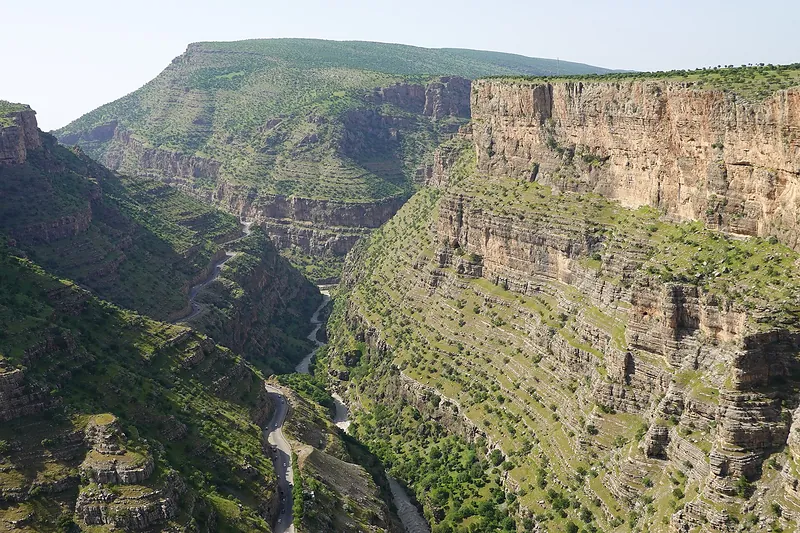
Başûr is the name Kurds give to the part of Kurdistan inside Iraq, and the word means "south" in Kurdish. Together with Northern Kurdistan (Bakur), Western Kurdistan (Rojava) and Eastern Kurdistan (Rojhilat), Southern Kurdistan is one of the four parts of Kurdistan. Most of the land of Southern Kurdistan is administered by the Kurdistan Region, whose capital is Hewlêr. The Kurdistan Region consists of the Hewlêr, Silêmanî, Dihok and Helebce governorates and is recognised by the Iraqi constitution as a federal region. Kerkûk, the Şingal district of Nineveh Governorate, the Xaneqîn district of Diyala Governorate, Mexmûr and the Nineveh Plains are disputed areas outside the Kurdistan Region's administration. Article 140 of the Iraqi constitution provides for the future of the disputed areas to be settled by a census and a referendum.
The Baban, Soran and Behdînan emirates ruled in Southern Kurdistan until the middle of the 19th century. Şêx Mehmûd Berzincî proclaimed the Kingdom of Kurdistan in Silêmanî in 1922. Mele Mistefa Barzani was elected, while in exile, president of the Kurdistan Democratic Party (Partiya Demokrat a Kurdistanê, KDP) in 1946. The September Revolution, led by Mele Mistefa Barzani, began on 11 September 1961 and ended after the Algiers Agreement of 1975. Celal Talabani founded the Patriotic Union of Kurdistan (Yekêtîy Nîştimanîy Kurdistan, PUK) in 1975. The Baath government carried out the Anfal campaign in 1988 and bombed Helebce with chemical weapons on 16 March 1988. After the uprising (Raperîn) of March 1991, the Kurdistan National Assembly was founded through the elections of 19 May 1992.
Peshmerga forces fought against ISIS from 2014 onwards. In 2016 the UN Commission of Inquiry on Syria found that ISIS had been committing genocide against the Êzîdîs of Şingal since August 2014. In the independence referendum held in the Kurdistan Region on 25 September 2017, 92.73 per cent of those who voted said yes. Iraqi government forces took control of Kerkûk on 16 October 2017. Alongside Kurds, Turkmens, Arabs, Assyrians, Chaldeans and Armenians live in Southern Kurdistan. Southern Kurdistan is also home to Êzîdî, Kakeyî and Christian communities. The economy of the Kurdistan Region relies heavily on oil, and oil revenue and the region's share of the federal budget remain a lasting dispute between Hewlêr and Baghdad.
Read more in the KRD21 encyclopedia
Related news
- Kormor attack deepens burden on Silêmanî tradersFederal government investigations do not reach the points the drones take off from, which lie outside the Kurdistan Region and are controlled by illegal armed groups, according to political analyst Kamîran Xerîb.
- US reaffirms support for a strong, united Kurdistan RegionBarrack said such unity in the Kurdistan Region can only be achieved by devolving and distributing powers, strengthening local administrations and increasing the role of official institutions.
- Hewlêr governor says flood damage will be compensatedAccording to Governor Omed Khoshnaw, the government will cover the losses of everyone affected, and institutions or projects that blocked waterways will be held accountable.
- Kerkûk provincial council calls extraordinary session to elect new governorAccording to Perwîn Fatih of the PUK, under the agreements reached the new governor will stay in office for less than two months. The governorship will then return to the Arab component.
- UN Secretary-General Guterres calls for inclusive government in KurdistanAccording to a statement by Farhan Haq, Guterres called for disputes to be resolved through legal channels and for an inclusive government to be formed as soon as possible.
- Serkut Ibrahim recounts final moments of son killed in Hewlêr floodSerkut Ibrahim said his son Mistefa had asked him, "But what if we die, Dad?" before the floodwaters swept their car away.
- Silêmanî got 4 to 5 hours of power in 24 hours, electricity director saysAccording to Enwer Heme Seîd, gas production at Kormor has fallen to zero and output at gas-fired power plants has stopped completely.
- President Barzani receives Ali Babacan in PîrmamThe meeting discussed the development of the historic relations between the Kurdistan Region and Turkey, the Barzani Headquarters said in a statement.
- Prime Minister Masrour Barzani visits Hewlêr Governorate over floodsThe meeting discussed delivering aid to flood victims and compensating affected citizens for their losses.
- Generators switched back on in SilêmanîGas production at the Kormor field halted after a drone attack on the site; in Silêmanî, it was decided that private generators will supply subscribers with electricity when grid power is out.
- Hewlêr Civil Defence pulls about 200 vehicles from floodwatersAccording to Colonel Şaxewan Seîd, the actual number of vehicles damaged in the flood is higher than 200, because other rescue teams also pulled out vehicles.
- Prime Minister Masrour Barzani says Hewlêr flood is being investigatedKurdistan Region Prime Minister Masrour Barzani said they had asked for an investigation into the causes of the flood and that measures would be taken if there was negligence.
- Hewlêr food ration card directorate issues update for citizensAccording to the directorate, the head of the household will not receive a food ration because their salary exceeds one and a half million dinars.
- Hewlêr municipality vows tough action against those blocking sewer manholesHewlêr Mayor Karzan Ebdulhadî said only a few of the city's 50 flood-risk points remain, adding that the municipality deals with manhole cover thefts every day and that its field teams continue to repair and reinstall the covers.
- Prime Minister Masrour Barzani holds talks with US special envoy Tom BarrackMasrour Barzani said progress had been made in the federal budget negotiations and that the oil and natural gas agreement was expected to be completed soon.
- Masrour Barzani announces single budget deal for Kurdistan RegionKurdistan Region Prime Minister Masrour Barzani says salaries of Kurdistan Region public employees will be paid without interruption and the region will be budgeted as a single unit, with its constitutional status preserved.
- Raperîn police chief denies detainee complaintsBrigadier General Cebar Xidir, police director of the Raperîn Administration, rejected the claims, saying detainees are given three meals a day and that their number varies between 75 and 110.
- Coordination Framework budget meeting postponedThe agenda also includes the Kurdistan Region delegation's visit to Baghdad and attacks on oil fields, according to a statement from Hamoudi's office.
- Al-Jazairi calls Prime Minister Masrour Barzani's visit an opportunityAccording to al-Jazairi, more than 60 percent of the outstanding problems have been resolved or are on the way to resolution following Masrour Barzani's meeting with Nouri al-Maliki.
- Iraqi PM's office says oil law discussed with Prime Minister Masrour BarzaniAccording to a statement from the Iraqi Prime Minister's Media Office, the two sides condemned the attack on the Kormor gas field and discussed the swift passage of the oil and gas law.