Region
Southern Kurdistan
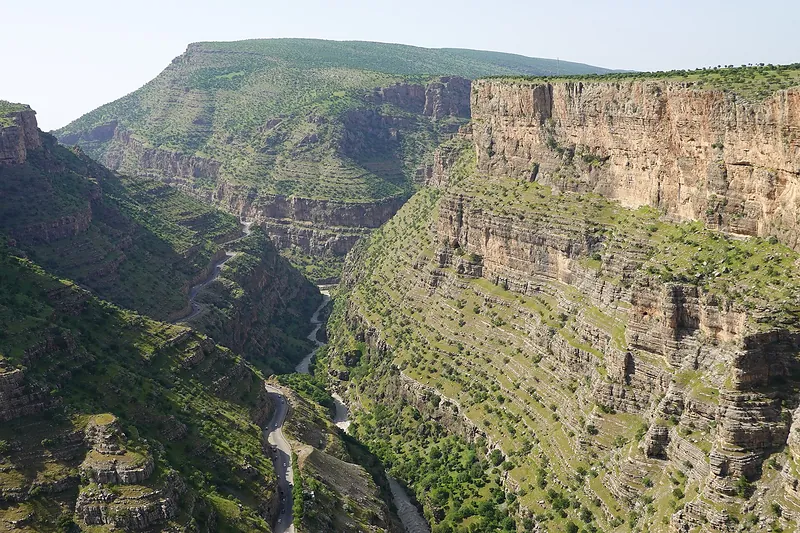
Başûr is the name Kurds give to the part of Kurdistan inside Iraq, and the word means "south" in Kurdish. Together with Northern Kurdistan (Bakur), Western Kurdistan (Rojava) and Eastern Kurdistan (Rojhilat), Southern Kurdistan is one of the four parts of Kurdistan. Most of the land of Southern Kurdistan is administered by the Kurdistan Region, whose capital is Hewlêr. The Kurdistan Region consists of the Hewlêr, Silêmanî, Dihok and Helebce governorates and is recognised by the Iraqi constitution as a federal region. Kerkûk, the Şingal district of Nineveh Governorate, the Xaneqîn district of Diyala Governorate, Mexmûr and the Nineveh Plains are disputed areas outside the Kurdistan Region's administration. Article 140 of the Iraqi constitution provides for the future of the disputed areas to be settled by a census and a referendum.
The Baban, Soran and Behdînan emirates ruled in Southern Kurdistan until the middle of the 19th century. Şêx Mehmûd Berzincî proclaimed the Kingdom of Kurdistan in Silêmanî in 1922. Mele Mistefa Barzani was elected, while in exile, president of the Kurdistan Democratic Party (Partiya Demokrat a Kurdistanê, KDP) in 1946. The September Revolution, led by Mele Mistefa Barzani, began on 11 September 1961 and ended after the Algiers Agreement of 1975. Celal Talabani founded the Patriotic Union of Kurdistan (Yekêtîy Nîştimanîy Kurdistan, PUK) in 1975. The Baath government carried out the Anfal campaign in 1988 and bombed Helebce with chemical weapons on 16 March 1988. After the uprising (Raperîn) of March 1991, the Kurdistan National Assembly was founded through the elections of 19 May 1992.
Peshmerga forces fought against ISIS from 2014 onwards. In 2016 the UN Commission of Inquiry on Syria found that ISIS had been committing genocide against the Êzîdîs of Şingal since August 2014. In the independence referendum held in the Kurdistan Region on 25 September 2017, 92.73 per cent of those who voted said yes. Iraqi government forces took control of Kerkûk on 16 October 2017. Alongside Kurds, Turkmens, Arabs, Assyrians, Chaldeans and Armenians live in Southern Kurdistan. Southern Kurdistan is also home to Êzîdî, Kakeyî and Christian communities. The economy of the Kurdistan Region relies heavily on oil, and oil revenue and the region's share of the federal budget remain a lasting dispute between Hewlêr and Baghdad.
Read more in the KRD21 encyclopedia
Related news
- Temporary Telegram block on the agenda in Kurdistan RegionAccording to the ministry's statement, Baghdad's letter was forwarded to all licensed internet companies in Başûr.
- Barzani sends message to strengthen Kurdistan-Russia relationsMesrur Barzani congratulated Rajbadinov on his new post, saying the Kurdistan Regional Government was ready to offer every kind of support for his diplomatic mission.
- US State Department calls Kurdistan Region a key pillarA US State Department spokesperson said they support Iraqi Prime Minister Ali Zeydi's vision of regaining sovereignty by bringing all weapons under state control.
- Barzani and al-Fayyadh stress the constitutionAccording to a statement from President Barzani's Office, the problems between the Kurdistan Region and Iraq's Federal Government were found to be resolvable within the framework of the constitution.
- Iraq's largest psychiatric hospital being built in Hewlêr, official saysAccording to Dilovan Muhammed, the new hospital will have 200 beds and will need about 500 staff to operate.
- Kurdistan Region health minister says surgery fee plan is readyAccording to Berzincî, drug prices have been cut by more than 660 billion dinars, and the Kurdistan Parliament has been asked to approve the Health Insurance Law.
- EU says it will keep backing Kurdistan Region's unityAccording to an EU official, any step aimed at dividing the Kurdistan Region must be avoided.
- Hewlêr's Green Belt to get 1.8 million olive treesAccording to Mîskî, the one-year-old saplings brought from Greece will take three years to bear fruit, and an olive oil factory is also planned as part of the project.
- Kurdistan Region launches police reform at four stationsAccording to Faris, the ministry and senior police commanders have set five priorities, including the establishment of model stations and the conversion of police colleges into academies.
- Silêmanî traffic directorate to install 48 violation cameras on city streetsThe new camera enforcement aims not only to record violations but to put an end to deadly street racing.
- Fourth haematology science congress opens in HewlêrKurdistan Region Minister of Endowments Peştîwan Sadiq and Health Minister Saman Berzincî are attending the conference, which aims to present innovations in the diagnosis and treatment of blood diseases.
- Iraq's 2027 draft budget gives the Kurdistan Region a 12.7 percent shareThe Kurdistan Regional Government has demanded that its budget share be raised to about 14.14 percent, based on the general population census.
- PUK announces thalassaemia treatment building in XaneqînAccording to the PUK, the region's 250 thalassaemia patients will no longer have to travel to other cities for blood and treatment.
- Silêmanî committee accuses Qubad Talabani of applying pressureThe committee alleges that there is a push to have the contract of the organisation running Kargey Kultûrî cancelled so that a new 49-year contract can be signed in the name of an organisation called Foundation.
- Foreign archaeologists discover hundreds of ancient sites in DihokExcavations that have been under way for about three years between the Mosul Dam gorge and Sêmêl have uncovered 300 ancient sites and artefacts, according to Cemal Cemîl, the official in charge of archaeology at the Kurdistan Region's General Directorate of Antiquities and Cultural Heritage.
- Hewlêr approves 5,000 tons of feed exports to Turkey and SyriaAccording to Hemin Sayid Murad, the 29 feed projects in Hewlêr operate under the supervision of the Directorate General of Agriculture and receive guidance to keep production at global standards. The region's feed production has exceeded domestic needs.
- Kurdish academics issue appeal to Kurdistan Region leadersThe academics called on political leaders to reach a compromise, noting that nearly two years have passed since the parliamentary elections and that the two major parties have withdrawn from the government formation process.
- German development minister makes Şingal stability a priorityGerman Development Minister Reem Alabali-Radovan announced a 70 million euro aid package for reconstruction, water management and the capacity of security forces at the end of a visit to Iraq and the Kurdistan Region.
- Kerosene to be distributed in Hewlêr's mountain areas, deputy governor saysAccording to Hêmin Qadir, each family will receive 100 litres from the 5 tankers of kerosene that have arrived so far.
- Sêmêl-Sêcî dual carriageway 42% complete, bringing Dihok closer to ZaxoSome 300 to 400 workers are on site and the narrow road is being turned into a 60-metre-wide, 4-lane avenue, according to Shaban Selim, representative of North Light, the project's contractor.