Region
Southern Kurdistan
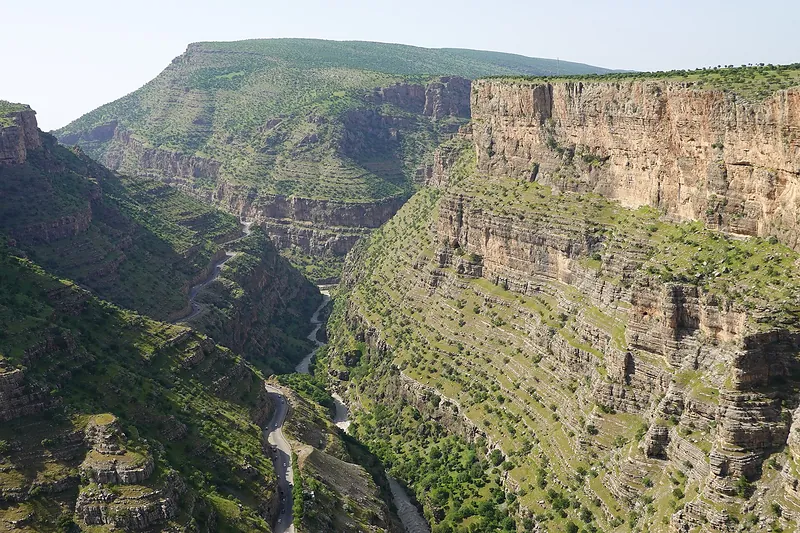
Başûr is the name Kurds give to the part of Kurdistan inside Iraq, and the word means "south" in Kurdish. Together with Northern Kurdistan (Bakur), Western Kurdistan (Rojava) and Eastern Kurdistan (Rojhilat), Southern Kurdistan is one of the four parts of Kurdistan. Most of the land of Southern Kurdistan is administered by the Kurdistan Region, whose capital is Hewlêr. The Kurdistan Region consists of the Hewlêr, Silêmanî, Dihok and Helebce governorates and is recognised by the Iraqi constitution as a federal region. Kerkûk, the Şingal district of Nineveh Governorate, the Xaneqîn district of Diyala Governorate, Mexmûr and the Nineveh Plains are disputed areas outside the Kurdistan Region's administration. Article 140 of the Iraqi constitution provides for the future of the disputed areas to be settled by a census and a referendum.
The Baban, Soran and Behdînan emirates ruled in Southern Kurdistan until the middle of the 19th century. Şêx Mehmûd Berzincî proclaimed the Kingdom of Kurdistan in Silêmanî in 1922. Mele Mistefa Barzani was elected, while in exile, president of the Kurdistan Democratic Party (Partiya Demokrat a Kurdistanê, KDP) in 1946. The September Revolution, led by Mele Mistefa Barzani, began on 11 September 1961 and ended after the Algiers Agreement of 1975. Celal Talabani founded the Patriotic Union of Kurdistan (Yekêtîy Nîştimanîy Kurdistan, PUK) in 1975. The Baath government carried out the Anfal campaign in 1988 and bombed Helebce with chemical weapons on 16 March 1988. After the uprising (Raperîn) of March 1991, the Kurdistan National Assembly was founded through the elections of 19 May 1992.
Peshmerga forces fought against ISIS from 2014 onwards. In 2016 the UN Commission of Inquiry on Syria found that ISIS had been committing genocide against the Êzîdîs of Şingal since August 2014. In the independence referendum held in the Kurdistan Region on 25 September 2017, 92.73 per cent of those who voted said yes. Iraqi government forces took control of Kerkûk on 16 October 2017. Alongside Kurds, Turkmens, Arabs, Assyrians, Chaldeans and Armenians live in Southern Kurdistan. Southern Kurdistan is also home to Êzîdî, Kakeyî and Christian communities. The economy of the Kurdistan Region relies heavily on oil, and oil revenue and the region's share of the federal budget remain a lasting dispute between Hewlêr and Baghdad.
Read more in the KRD21 encyclopedia
Related news
- Academics urge protection of the Kurdistan Region's existenceThe academics said they were concerned that a government has still not been formed two years after the elections. They warned that the two main political parties' refusal to recognise the parliamentary session and their withdrawal from the government formation process endanger political unity and the stability of the federal structure.
- Oil smuggling committee to visit Silêmanî, says Zîrek ZêbarîAccording to Zêbarî, the committee is gathering verified documents, and the final report it will draw up is to be submitted to the Iraqi Prime Minister.
- Kurdistan Region begins drafting 2026-2030 human rights planThe new plan aims to protect the Kurdistan Region's national and international gains and unify the stance of institutions, according to International Recommendations Coordinator Dîndar Zêbarî.
- Coordination Framework ties Silêmanî demand to referendum, al-Dafai saysAccording to al-Dafai, the Coordination Framework has made the Patriotic Union of Kurdistan delegation's demand for Silêmanî to become a second administration conditional on a referendum to be held in Silêmanî and Helebce.
- PM Masrour Barzani lays foundation stone for Mövenpick Gomaspan projectThe project will be the core of a major tourism investment and will bring further investments with it, according to Mohammed Shukri, head of the Kurdistan Region Board of Investment.
- Review of land plot files for employees continues in HewlêrThe Kurdistan Region's Ministry of Municipalities and Tourism will launch an electronic application allowing title deeds to be tracked by national ID number, in order to make procedures easier.
- Iraq's Federal Court also rejects Kurdistan Parliament caseThe court unanimously dismissed the case, ruling that the continuation of the sixth term is not subject to judicial review under Article 93 of the constitution.
- German minister Alabali-Radovan pledges continued support for ŞingalAccording to Alabali-Radovan, German support for the Ezidi community and for the reconstruction of Şingal will also continue.
- Woman killed by her brother in Dihok, police sayThe suspect surrendered to Asayîş forces shortly afterwards, according to Silêman, who said the suspect had killed his sister over a social problem.
- Kurdistan Region round table tackles hate speech and coexistenceAccording to Dîndar Zêbarî, followers of eight different religions and denominations live in the Kurdistan Region.
- Germany reaffirms support for peace and stability in the Kurdistan RegionAccording to a statement from the Prime Minister's Office, the need to reactivate the Kurdistan Parliament and to normalise the situation in Şingal was stressed at the meeting.
- Kurdistan Regional Government invests nearly $8 billion in tourismAccording to official figures, tourism accounted for 44 percent of total investment capital, ahead of every other sector.
- Kurdistan Union of Islamic Religious Scholars calls on parties to uniteAccording to a statement by the Kurdistan Union of Islamic Religious Scholars, the existence of the region, a unified national stance and the stability of the Kurdish house stand above all parties and interests.
- Kurdistan Region minister Ano Cewher lists Turkmen gainsAccording to Cewher, the Turkmen quota in the Kurdistan Parliament has been made permanent, and schools teaching in Turkmen have been opening for a long time.
- Kerosene distribution to begin in DihokThe Kurdistan Region's Ministry of Natural Resources said kerosene will be distributed through the Dihok Directorate of Oil and Minerals. The share for the Hewlêr, Silêmanî and Helebce governorates and for independent administrations has also been approved.
- French ambassador tells President Barzani of Kurdistan's active rolePresident Barzani said the people of Kurdistan regard the people and government of France with appreciation and respect for the support they have given them.
- Oil looting in Kerkûk under investigation, says Hesen MecîdHesen Mecîd said the findings were unlikely to be announced soon, until the investigation has reached definitive and complete conclusions.
- Kurdistan Region traffic accidents down 70 percent in eight yearsColonel Hêmin Emîn, spokesperson for the Hewlêr Traffic Directorate, attributed the improvement to the alignment of urban development projects with modern engineering planning.
- Prime Minister Masrour Barzani receives France's new ambassador to IraqKurdistan Region Prime Minister Masrour Barzani said the Kurdistan Regional Government would fully support the new ambassador in carrying out his diplomatic duties; the meeting also covered the process of reactivating the Kurdistan Parliament.
- President Barzani offers condolences to Peshmerga ministerAhmed Ismail, a former Peshmerga fighter and brother of Peshmerga Minister Shoresh Ismail, has died of illness.