Place
Hesekê
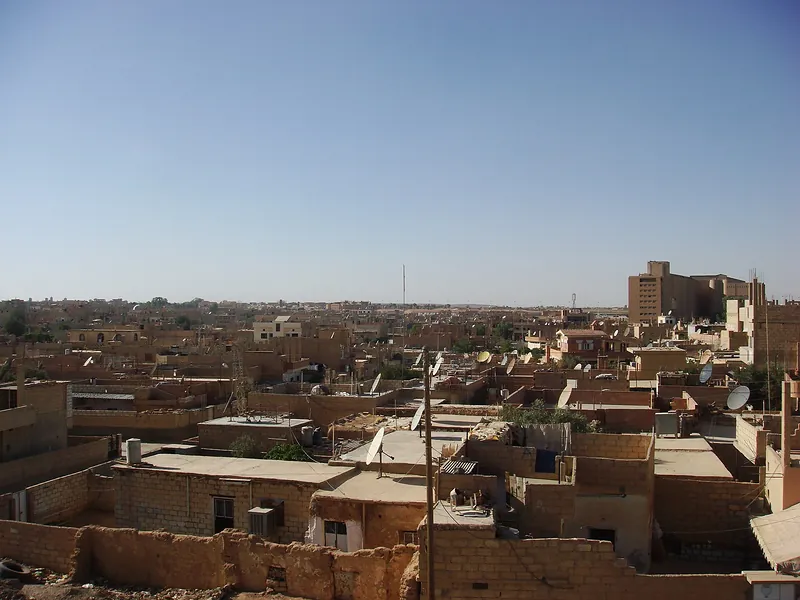
Hesekê is a city in Western Kurdistan (Rojava), founded in the area where the Khabur and Jaghjagh rivers meet, and is the capital of the Syrian governorate bearing the same name. From 2012 until mid-2026, administration of the city was divided in two: the security zone housing state institutions remained in the hands of the Damascus government, while the rest of the city was governed by the Kurdish-led Asayish forces affiliated with the Autonomous Administration of North and East Syria (AANES). As a result of negotiations that began after the fall of the Bashar al-Assad government in December 2024, SDF commander Mazloum Abdi announced on 20 August 2026 that the process of integrating the army, security and administrative institutions into Syrian state institutions had been completed; on 25 August, it was announced that the SDF and AANES had been dissolved as independent structures and had been fully integrated into the Syrian state. The city is today administered by the Syrian transitional government led by Ahmed al-Sharaa. According to the 2004 census, the city's population was 188,160; since no official census has been conducted after this date, there is no precise data on the current population, and estimates vary widely due to war and migration. Hesekê grew through railway and agricultural investments in the region at the beginning of the 20th century, becoming a mixed city where large numbers of Kurds, Syriacs and Armenians settled, especially after the First World War.
Read more in the KRD21 encyclopedia
Related news
- Xabûr water intake in Rojava's Hesekê reopens after 14 yearsAccording to a statement by the Syrian Ministry of Energy, putting the gate back into operation will supply irrigation water to some 12,000 hectares of farmland.
- Water pumping resumes from Alok station to Hemme stationAccording to information provided by the company, water will not reach all neighborhoods of the city immediately; distribution will be carried out gradually according to the approved schedule.
- Committee member Ciwan Îso says returns stuck at 20 percentCommittee board member Ciwan Îso said none of the parties are taking the return process seriously and that there is no clear strategy for a safe return.
- Hesekê agriculture directorate reports drop in insect numbersAccording to the Hesekê Agriculture Directorate, a marked decline in insect numbers was observed after three days of work, bringing relief to local residents.
- Fur coats return to clothing shop windows in HesekêAccording to traditional clothing tailor Ahmed Davud, making a "tafali" fur coat begins with selecting suitable lambskins, while the way the skins are tanned determines the coat's flexibility.
- All 36 archaeological sites in Efrîn damaged, says Bettal XelilWarplane bombardment, illegal excavations and refugee camps contributed to the destruction, according to Ayman Nabo, deputy director-general of antiquities in Syria.
- Qamişlo residents oppose division of Kurdistan RegionQamişlo resident Çeleng Mele Ehmed called on Kurdish parties to reach consensus instead of division and form a single government and a single region.
- Hesekê governor Ahmed says security institution 80 to 90 percent operationalAccording to Hesekê Governor Ahmed, the security institution is now 80 to 90 percent operational, while the main difficulties lie in services and in unifying school curricula.
- UN says Syria-SDF deal hinges on Kurdish representationAccording to Cordone, more than a hundred Kurdish families trying to return to Girê Spî faced violence and intimidation; Cordone called for the violations to be investigated.
- Rojava University students protest against tear gas useSecurity forces reportedly fired tear gas during a government education delegation's visit to the university, after students blocked the delegation from leaving the building.
- SOHR calls for independent inquiry into young Kobanê man's death at borderSOHR demanded that the incident be clarified through an independent and transparent investigation, and that those responsible be identified and held accountable.
- Qamişlo Palace of Justice reopens after two yearsAccording to Hesekê Governor Nureddin Ahmed, the new structure also covers the former judges, and the courts will now operate under the Ministry of Justice like those in other Syrian provinces.
- Currency crisis halts work at Qamişlo's wholesale marketSome people trading at the wholesale market in Qamişlo have called for a quick mechanism to regulate the joint use of the old and new currency.
- Kurdish students in Hesekê protest for mother-tongue educationUnder a decision by Syria's Ministry of Education, Kurdish lessons have been limited to three hours a week, while Arabic has been set as the core curriculum.
- 373 families set out to return to Serêkaniyê, Zehra Simo saysAccording to Zehra Simo, Kurdish families could not join the return convoy because of the presence of armed men and of families from elsewhere in homes in Serêkaniyê city centre.
- Hesekê governor Nureddin Ahmed urges students to register for admissionsAccording to Governor Ahmed, university admission and official recognition of results depend solely on the rules approved by the ministry.
- Heating diesel allowance per family in Hesekê falls from 300 to 200 litresThe 45,000 litres of diesel allocated daily do not meet demand, according to Nevar Sabri, a member of the Hesekê Governorate's Energy and Communications Sector Executive Office.
- Hesekê authorities begin distributing heating diesel at 115 poundsEach family has been allocated 200 litres of diesel and 45,000 litres are being distributed per day, said Nevar Sabri, a member of the Executive Office of Hesekê Governorate.
- Water leaks shut down some wards at Qamişlo National HospitalAlan Şêxî, head of the hospital's Engineering and Maintenance Department, said most of the problem stems from old water and sewage pipes that have outlived their service life.
- Fuel crisis leaves many families in Hesekê strugglingThe price of a 220-litre barrel of diesel has reportedly risen to about 300 dollars, while distribution of the heating allocation has not begun.